

In the industrial manufacturing sector, the two most common options when selecting hot melt adhesives are EVA (Ethylene-Vinyl Acetate Copolymer) and PUR (Polyurethane Reactive) hot melt adhesives.
Although both require melting via heating for adhesive application, they have fundamental differences in chemical properties, performance limits, and applicable scenarios. Choosing the wrong adhesive will either lead to performance redundancy and unnecessary cost increases, or cause catastrophic debonding of end products in harsh environments.

Core Differences: Thermoplastic vs. Thermoset
The biggest difference between these two types of adhesives lies in their curing mechanisms:
EVA is a "thermoplastic" adhesive: Its curing completely depends on physical temperature changes. It melts into a liquid when heated, and solidifies again to form a bond after cooling. Since this is only a physical change, the process is reversible. If you reheat a product bonded with EVA, the adhesive will melt again, and the bond will fail.
PUR is a "thermoset" adhesive: Its curing is divided into two stages. The first stage is similar to EVA, it develops initial adhesion through physical cooling. In the second stage, it undergoes a chemical cross-linking reaction (moisture-curing) with moisture in the air and on the surface of the substrate. Once the chemical reaction is complete (which usually takes 24-48 hours), a strong and tough network molecular structure will form inside the colloid. This process is irreversible. Even if the cured PUR is exposed to high temperature again, it will not melt.
List of Core Performance Comparison
For quick and easy evaluation, here is an intuitive comparison of key manufacturing indicators between EVA and PUR:
|
Performance / Indicator |
EVA (General Hot Melt Adhesive) |
PUR (Reactive Polyurethane Hot Melt Adhesive) |
|
Curing Mechanism |
Physical reaction (temperature cooling) |
Physical reaction (temperature cooling) + Chemical reaction (moisture cross-linking) |
|
Reversibility |
Reversible (will remelt when heated) |
Irreversible (cannot remelt after full curing) |
|
High Temperature Resistance |
Low to medium (usually starts to soften at around 60°C - 75°C) |
Extremely high (usually can withstand 120°C - 150°C or even higher) |
|
Low Temperature Resistance and Water Resistance |
Medium (may become brittle in severe cold, average water resistance) |
Excellent (highly weather-resistant, water-boiling-resistant and extremely cold-resistant) |
|
Bonding Strength |
Standard grade (suitable for porous materials such as paper and wood) |
Structural grade (can bond non-porous difficult-to-bond materials such as metal and plastic) |
|
Flexibility |
Mostly rigid or semi-rigid |
Extremely high (elastic, can expand and contract with the base material with temperature changes) |
|
Glue Application Equipment Requirements |
Ordinary open hot melt adhesive machine and glue cylinder are sufficient |
Special moisture-proof and sealed isolation equipment (such as platen glue machine) is required |
|
Material Cost |
Low |
High |
In-depth Performance Analysis
Temperature Resistance and Weather Resistance:
EVA: It is very sensitive to extreme temperatures. If furniture edge-banded with EVA is placed in a high-temperature container or exposed to a vehicle under direct sunlight in summer, the glue line is prone to softening and cracking. In sub-zero environments, EVA also tends to become brittle and lose its adhesion. The curing speed is completely dependent on ambient temperature and heat dissipation rate. It has a fast initial curing speed, but if the glue is applied thickly, the slow cooling of the deep layer will delay bonding and shaping. The overall curing time is negatively correlated with ambient temperature.
PUR: It has excellent weather resistance. After complete cross-linking curing, PUR can easily withstand extreme high temperatures (often exceeding 130°C) and freezing cold, without any damage to its structural stability. It can complete initial curing and shaping after cooling to room temperature. Then it slowly completes deep cross-linking by contacting moisture in the air, and the final strength takes 12 to 72 hours to be fully achieved. The final curing is not affected by the glue layer thickness.
Bonding Scope and Strength
EVA: It performs best on "porous substrates" such as paper, cardboard and common wood. It mainly relies on the "mechanical interlocking force" penetrating into the pores of the material to achieve adhesion. A larger glue coating amount is required to ensure bonding strength. Generally, the glue coating amount for edge banding is 150~250g/㎡.
PUR: It belongs to structural-grade adhesive. Thanks to its chemical reaction characteristics, it can firmly bond extremely difficult-to-process non-porous materials and low surface energy (LSE) materials, including metals, glass, fiberglass, and plastics such as PVC and ABS. It can achieve higher strength with only a smaller glue coating amount. Generally, the glue coating amount is only 80~120g/㎡, and the glue consumption per unit area can be reduced by nearly half.
Production and Equipment Considerations
Operation of EVA: It is extremely user-friendly. It has a long shelf life and does not require sealed and moisture-proof packaging. Operators only need to pour the glue pellets or glue blocks into an ordinary open melting glue tank. Shutdown and cleaning are also very simple, and cleaning can be done just by reheating.
Operation of PUR: It requires strict operating procedures. Since PUR will react with moisture in the air, it must be packaged in vacuum aluminum foil bags or sealed glue tanks. Special gluing equipment equipped with nitrogen protection or dry air is required during production to prevent the glue from skinning or curing in the glue tank. Special purging agent is also required to clean the system.
How to choose between EVA and PUR?
When to choose EVA?
• Carton packaging: For scenarios that do not require structural strength and extreme heat resistance, such as express carton sealing and carton forming.
• Basic woodworking manufacturing: For edge banding of ordinary indoor furniture and office furniture that will not be exposed to high temperature or high humidity environments.
• Low-cost, mass-produced consumer goods: Production focuses on extremely high output speed and ultimate cost control.
When must you choose PUR?
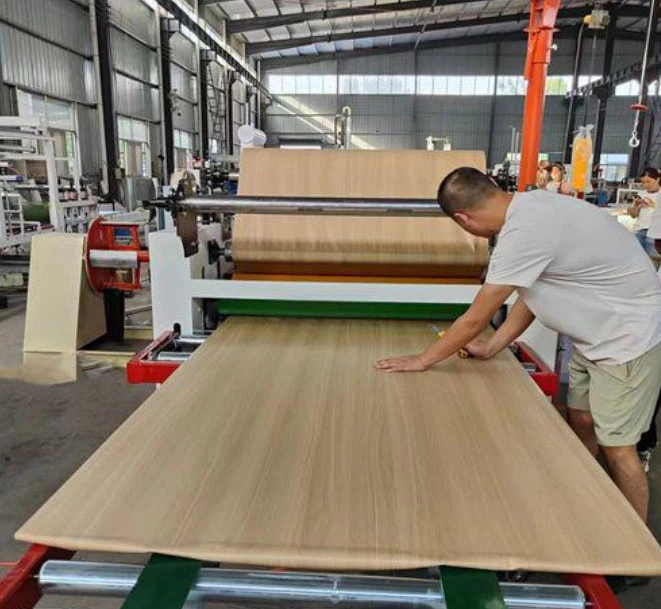
• High-end woodworking and whole-house customization: Edge banding for kitchen and bathroom cabinets, and manufacturing of outdoor wooden doors. In these environments, waterproof and steam-proof performance is a rigid requirement, and PUR is the only option.
• Automotive interior assembly: Adhesion of roof linings, door panels, dashboards and other components, which must withstand the high temperature inside the car when exposed to the scorching sun in summer.
• Textile and shoe material lamination: Lamination of waterproof and breathable fabrics and sole assembly, requiring extremely flexible and washable adhesive layer.
• Electronics and home appliance manufacturing: Screen bonding and shell assembly require permanent and tight structural sealing against moisture and dust.
To learn more about our PUR hot melt adhesive solutions, please visit our PUR hot melt adhesive product range, or contact our technical team directly for selection advice.


