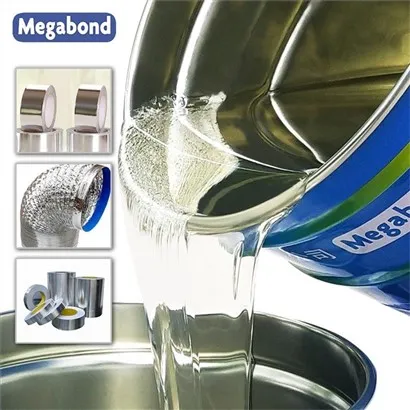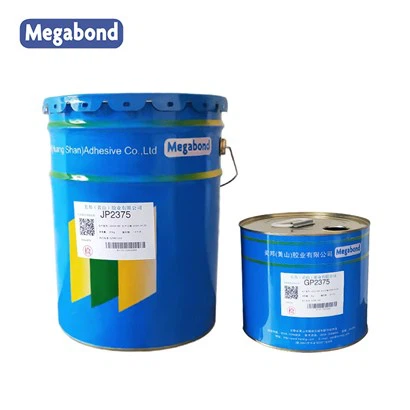


Hey there! As a supplier of Polyether lamination adhesive, I often get asked whether our product can be used for bonding rubber. Well, let's dive right into this topic and find out.
First off, let's understand what Polyether lamination adhesive is. It's a type of adhesive that has a bunch of great properties. For instance, it offers good flexibility, high bond strength, and excellent chemical resistance. These features make it a popular choice in many industries, especially in packaging and laminating. You can check out our Solvent-free Polyether Laminating Adhesive for more details on the specific product.
Now, when it comes to bonding rubber, there are several factors we need to consider. Rubber has its own unique characteristics. It can be soft, flexible, and sometimes it has a low surface energy. This low surface energy can make it a bit tricky for adhesives to stick to. But don't worry, Polyether lamination adhesive has some tricks up its sleeve.
One of the key things about our Polyether lamination adhesive is its ability to form strong intermolecular bonds. When applied to rubber, it can penetrate the surface to some extent and create a bond that holds up well under normal conditions. The flexibility of the adhesive also matches well with the flexibility of rubber, which means the bond won't break easily when the rubber is bent or stretched.
Let's talk about the different types of rubber. There are natural rubber and synthetic rubbers like neoprene, nitrile, and silicone. Each type has its own chemical composition and properties, which can affect how well the adhesive bonds to it.
Natural rubber is relatively easy to bond with Polyether lamination adhesive. It has a relatively high surface energy compared to some synthetic rubbers, which allows the adhesive to wet the surface better. Once the adhesive wets the surface, it can start to form those important bonds.
Synthetic rubbers, on the other hand, can be a bit more challenging. For example, silicone rubber has a very low surface energy and is quite inert chemically. This means that special surface treatments might be required before applying the adhesive. But if you use our Solvent-free Anti-Chemicals Laminating Adhesive, which is designed to have good chemical resistance and adhesion properties, you can often achieve a good bond even with silicone rubber.
Another important aspect is the curing process. Polyether lamination adhesive usually cures at room temperature or with a little bit of heat. When bonding rubber, it's crucial to follow the recommended curing conditions. If the adhesive doesn't cure properly, the bond strength will be compromised.
Let's also consider the environment in which the bonded rubber will be used. If it's going to be exposed to high temperatures, chemicals, or moisture, we need to choose the right type of adhesive. Our Solvent-free 100℃ Anti-Cooking Laminating Adhesive is a great option if the bonded rubber will be exposed to high temperatures. It can maintain its bond strength even under these harsh conditions.


In some industrial applications, rubber parts need to be bonded together to form a larger component. Polyether lamination adhesive can be a great choice for this. It can provide a strong and durable bond that can withstand the stresses and strains of the application. For example, in the automotive industry, rubber seals and gaskets need to be bonded securely. Our adhesive can ensure that these components stay in place and perform their function effectively.
Now, let's talk about some of the potential drawbacks. While Polyether lamination adhesive can work well for bonding rubber, it might not be the best choice for every situation. For example, if the rubber needs to be bonded to a very rough or porous surface, the adhesive might not be able to form a uniform bond. In such cases, additional surface preparation or a different type of adhesive might be required.
Also, the cost can be a factor. Polyether lamination adhesive might be more expensive than some other types of adhesives. But when you consider the long-term benefits, such as the high bond strength and durability, it can be a worthwhile investment.
In conclusion, Polyether lamination adhesive can definitely be used for bonding rubber in many cases. It offers a good combination of flexibility, bond strength, and chemical resistance. However, it's important to consider the type of rubber, the surface conditions, and the environmental factors. By choosing the right type of adhesive from our range, such as the Solvent-free Polyether Laminating Adhesive, Solvent-free 100℃ Anti-Cooking Laminating Adhesive, or Solvent-free Anti-Chemicals Laminating Adhesive, you can achieve a strong and reliable bond.
If you're in the market for an adhesive for bonding rubber or have any questions about our products, don't hesitate to reach out. We're here to help you find the best solution for your specific needs. Let's start a conversation and see how we can work together to get the job done right.
References
- "Adhesives and Sealants Handbook" by Patrick D. Richardson
- "Rubber Technology" by Maurice Morton