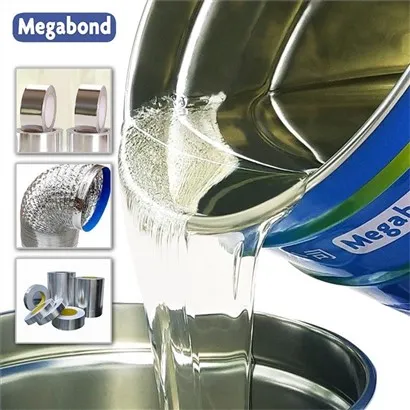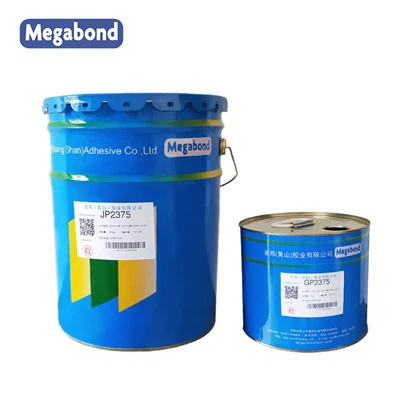


Hey there! As a supplier of Solvent Free Polyurethane Adhesive, I often get asked this question: "Can Solvent Free Polyurethane Adhesive be tinted?" Well, let's dive right into it and find out.
First off, let's understand what solvent free polyurethane adhesive is. It's a type of adhesive that doesn't contain any solvents. This makes it a great choice for a lot of applications, especially in industries where environmental concerns and safety are top priorities. It has excellent bonding properties, good flexibility, and is resistant to many chemicals.
Now, back to the main question - tinting. Tinting an adhesive means adding color to it. There are a few reasons why someone might want to tint a solvent free polyurethane adhesive. Maybe they want the adhesive to match the color of the materials it's bonding, or perhaps they're using it for a decorative purpose.
The good news is that, in most cases, solvent free polyurethane adhesive can be tinted. However, there are some important things to keep in mind.
Factors Affecting Tinting
Compatibility
The first thing to consider is the compatibility between the tinting agent and the adhesive. Not all tinting agents will work well with solvent free polyurethane adhesive. Some tinting agents might react with the adhesive, causing it to change its properties. For example, it could affect the curing time, the bonding strength, or the flexibility of the adhesive.
So, before you start tinting, it's crucial to test the tinting agent with a small sample of the adhesive. You can do this by mixing a tiny amount of the tinting agent with the adhesive and observing how it behaves. Check if it cures properly, if the color is evenly distributed, and if the bonding strength is still good.
Tinting Agent Type
There are different types of tinting agents available, such as pigments and dyes. Pigments are usually solid particles that are dispersed in the adhesive to give it color. They tend to be more opaque and provide better color stability. Dyes, on the other hand, are soluble in the adhesive and can give a more transparent color.
Pigments are often preferred for tinting solvent free polyurethane adhesive because they are more likely to be compatible with the adhesive and provide a more consistent color. However, you need to make sure that the pigments are fine enough to be evenly dispersed in the adhesive. If the pigment particles are too large, they might settle at the bottom of the adhesive, causing an uneven color distribution.
Adhesive Properties
The properties of the solvent free polyurethane adhesive itself can also affect the tinting process. For example, some adhesives have a high viscosity, which means they are thick and sticky. This can make it more difficult to mix the tinting agent evenly. In such cases, you might need to use a high - speed mixer or heat the adhesive slightly to make it more fluid and easier to mix.
Our Solvent Free Polyurethane Adhesive Products
We offer a range of solvent free polyurethane adhesive products that can potentially be tinted. For example, our Solvent-free 100℃ Anti-Cooking Laminating Adhesive is designed for laminating applications where resistance to high temperatures is required. It has excellent bonding strength and can be a great candidate for tinting if you need a colored adhesive for your laminating projects.
Another product is our Solvent-free Aluminum Foil To Films Laminating Adhesive. This adhesive is specifically formulated for bonding aluminum foil to films. Tinting this adhesive can be useful if you want to match the color of the laminated materials or add a decorative touch.
And our Solvent-free 125℃ Retortable Laminating Adhesive is suitable for applications that require high - temperature sterilization. Tinting this adhesive can be beneficial for both aesthetic and functional purposes, such as color - coding different products.
Tinting Process
If you've determined that the tinting agent is compatible with your solvent free polyurethane adhesive, here's a general process for tinting:
- Prepare the Adhesive: Make sure the adhesive is at the right temperature and viscosity for mixing. If it's too thick, you can gently heat it according to the manufacturer's instructions.
- Add the Tinting Agent: Slowly add the tinting agent to the adhesive while stirring continuously. Start with a small amount and gradually increase it until you reach the desired color.
- Mix Thoroughly: Use a mixer or a stirring rod to mix the adhesive and the tinting agent thoroughly. Make sure there are no clumps or uneven color patches.
- Test the Tinted Adhesive: Before using the tinted adhesive on a large - scale project, test it on a small area to ensure that it still has the desired properties, such as bonding strength and curing time.
Potential Challenges
Even when you follow all the steps correctly, there can still be some challenges when tinting solvent free polyurethane adhesive.
One common issue is color fading over time. Some tinting agents might not be very stable, especially when exposed to sunlight, heat, or chemicals. This can cause the color of the adhesive to fade or change. To minimize this problem, choose a high - quality tinting agent that is known for its color stability.
Another challenge is achieving a consistent color across different batches. Even if you use the same amount of tinting agent, there can be slight variations in the color due to differences in the adhesive batches or the mixing process. To address this, it's important to keep detailed records of the tinting process, including the amount of tinting agent used, the mixing time, and the temperature.
Conclusion
So, to answer the question "Can Solvent Free Polyurethane Adhesive be tinted?" - yes, it can be, but with some considerations. By choosing the right tinting agent, testing for compatibility, and following the proper tinting process, you can achieve a tinted adhesive that meets your needs.


If you're interested in our solvent free polyurethane adhesive products and have questions about tinting or any other aspect, feel free to reach out to us. We're here to help you find the best adhesive solution for your projects. Whether you need a colored adhesive for a decorative application or a high - performance adhesive for industrial use, we've got you covered. Let's start a conversation and see how we can work together!
References
- "Polyurethane Adhesives: Chemistry, Technology, and Applications" by X. Yuan and K. C. Frisch
- Industry standards and guidelines for solvent free polyurethane adhesives