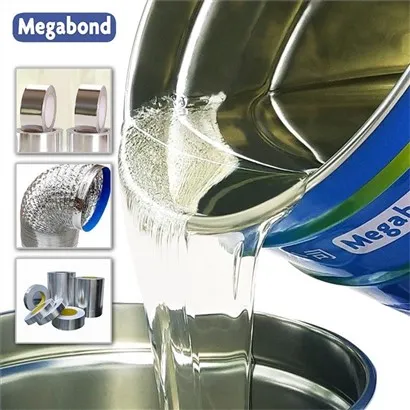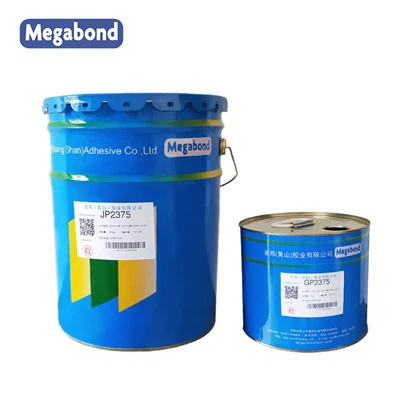


Hey there! As a supplier of Solvent Based Polyurethane Adhesive, I often get asked a bunch of questions from our customers. One of the most common ones is, "Does Solvent Based Polyurethane Adhesive shrink during curing?" Today, I'm gonna dive deep into this topic and share some insights with you.
First off, let's understand what solvent-based polyurethane adhesive is. It's a type of adhesive that contains solvents, which help in spreading the adhesive evenly and also affect its drying and curing process. This kind of adhesive is widely used in various industries, like packaging, woodworking, and automotive, because of its strong bonding properties.
Now, let's talk about the big question - shrinkage during curing. The short answer is, yes, solvent-based polyurethane adhesive can shrink during curing, but it's not that simple. There are a bunch of factors that influence how much it shrinks.
One of the main factors is the solvent evaporation. When the adhesive is applied, the solvents start to evaporate as it cures. This evaporation causes a reduction in volume, which leads to shrinkage. The rate of solvent evaporation depends on things like the type of solvent used, the temperature, and the humidity of the environment. For example, if the temperature is high and the humidity is low, the solvents will evaporate faster, and there might be more shrinkage.
Another factor is the chemical reaction that occurs during curing. Polyurethane adhesives cure through a chemical reaction between the isocyanate and the polyol components. This reaction forms a polymer network, and during this process, there can be some rearrangement of the molecules, which might result in shrinkage. The formulation of the adhesive, including the ratio of the isocyanate to the polyol, can also affect how much shrinkage occurs.
The substrate on which the adhesive is applied also plays a role. Different substrates have different surface energies and porosities. If the substrate is porous, it can absorb some of the solvents from the adhesive, which can affect the curing process and the amount of shrinkage. For instance, wood is a porous substrate, and it can absorb solvents, potentially leading to more shrinkage compared to a non-porous substrate like metal.
Now, you might be wondering, is shrinkage a bad thing? Well, it depends. In some cases, a small amount of shrinkage can be okay. It can actually help in creating a tight bond between the substrates. But if the shrinkage is too much, it can cause problems. It can lead to stress on the bond, which might result in the adhesive peeling off or the bond failing over time. It can also cause warping or distortion of the substrates, especially if they are thin or flexible.
So, what can we do to minimize shrinkage? As a supplier, we work hard on formulating our adhesives to reduce shrinkage as much as possible. We carefully select the solvents and the other components to ensure a balanced curing process. We also provide guidelines on the application conditions, like the recommended temperature and humidity range, to help our customers get the best results.


Let me introduce some of our products that are designed to perform well in different applications. We have the Solvent-based Low Cost Laminating Adhesive, which is great for packaging applications where cost is a concern but you still need a reliable bond. It's formulated to have a reasonable level of shrinkage that won't compromise the quality of the lamination.
If you're looking for an adhesive that can withstand high temperatures during the retorting process in food packaging, our Solvent-based 121℃ Anti-Retorting PU Laminating Adhesive is a great choice. It's designed to have minimal shrinkage even under the harsh conditions of retorting, ensuring a strong and durable bond.
For applications where the product might be exposed to boiling water, our Solvent-based 100℃ Anti-Boiling Laminating Adhesive is ideal. It maintains its bonding strength and has a controlled level of shrinkage, so it can keep the substrates together even in a boiling environment.
In conclusion, while solvent-based polyurethane adhesive can shrink during curing, there are ways to manage it. By understanding the factors that influence shrinkage and using the right adhesive for the job, you can achieve a strong and reliable bond. If you're in the market for a solvent-based polyurethane adhesive and have questions about shrinkage or any other aspect, don't hesitate to reach out. We're here to help you find the best solution for your specific application. Whether you're in the packaging, woodworking, or any other industry, we've got an adhesive that can meet your needs. So, let's start a conversation and see how we can work together to get the job done right.
References:
- "Polyurethane Adhesives: Chemistry, Technology, and Applications" - A comprehensive book on polyurethane adhesives that covers various aspects of their chemistry and performance.
- Industry research papers on solvent evaporation and shrinkage in adhesives, which provide in - depth analysis of the factors involved.