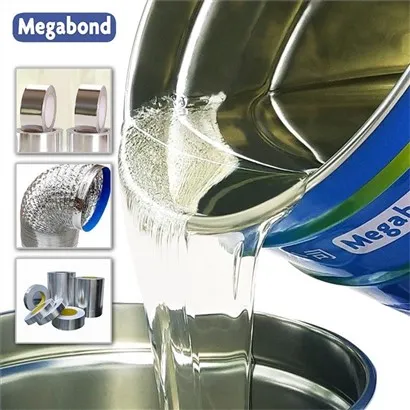


Hey there! As a supplier of water-based lamination adhesive, I've been getting a ton of questions lately about how the shear strength of our product stacks up against other adhesives out there. So, I thought I'd take a deep dive into this topic and share some insights with you all.
First off, let's talk about what shear strength actually means. Shear strength is the ability of an adhesive to resist forces that try to slide two bonded surfaces past each other. In the world of lamination, this is super important because the bonded materials are often subjected to various stresses during handling, storage, and use.
Now, let's compare water-based lamination adhesives to some of the other popular types of adhesives in terms of shear strength.
Solvent-Based Adhesives
Solvent-based adhesives have been around for a long time and are known for their strong bonding capabilities. They typically have high initial tack, which means they can quickly grab onto the surfaces being bonded. However, when it comes to shear strength, water-based lamination adhesives can give them a run for their money.
One of the main advantages of water-based adhesives is that they can form a strong, durable bond over time. As the water evaporates, the adhesive particles come together and create a tight network that resists shear forces. In some cases, water-based adhesives can even achieve higher shear strength than solvent-based adhesives, especially when used on certain types of substrates.
Another thing to consider is the environmental impact. Solvent-based adhesives contain volatile organic compounds (VOCs), which can be harmful to the environment and human health. Water-based adhesives, on the other hand, are much more eco-friendly as they have low or zero VOC emissions. This makes them a great choice for companies that are looking to reduce their carbon footprint.

Hot Melt Adhesives
Hot melt adhesives are another popular option in the lamination industry. They are applied in a molten state and solidify quickly as they cool down, forming a strong bond. Hot melt adhesives are known for their fast bonding speed and high initial strength.
However, when it comes to shear strength over the long term, water-based lamination adhesives may have an edge. Hot melt adhesives can be sensitive to temperature changes, and their bond strength can decrease at high temperatures. Water-based adhesives, on the other hand, are more stable and can maintain their shear strength over a wider range of temperatures.
In addition, hot melt adhesives can be more difficult to apply evenly, especially on large surfaces. Water-based adhesives, on the other hand, can be easily applied using a variety of methods, such as roll coating, spray coating, or curtain coating. This makes them a more versatile option for different types of lamination applications.
Epoxy Adhesives
Epoxy adhesives are known for their extremely high strength and durability. They are often used in applications where a very strong bond is required, such as in the aerospace and automotive industries.
However, epoxy adhesives can be expensive and require a longer curing time compared to water-based lamination adhesives. They also tend to be more brittle, which means they may not be suitable for applications where the bonded materials need to be flexible.
Water-based lamination adhesives, on the other hand, offer a good balance of strength and flexibility. They can form a strong bond that can withstand shear forces, while still allowing the bonded materials to bend and flex without breaking the bond.
Our Water-Based Lamination Adhesive
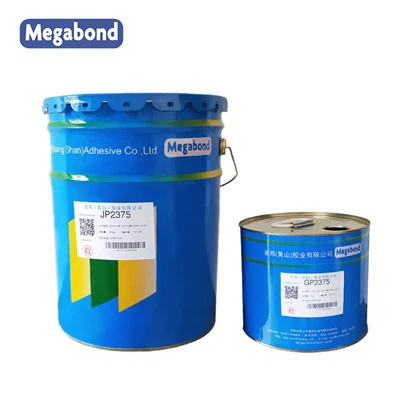
At our company, we offer a high-quality Water-based Acrylic Laminating Adhesive that has been specifically formulated to provide excellent shear strength. Our adhesive is made from a blend of acrylic polymers and other additives that work together to create a strong, durable bond.
One of the key features of our water-based lamination adhesive is its fast drying time. This allows for quick production cycles and reduces the time required for the bonded materials to be handled and processed. In addition, our adhesive has a high solids content, which means it can provide a thicker and more uniform bond compared to other water-based adhesives.
We also offer a range of different formulations to meet the specific needs of our customers. Whether you need an adhesive for paper lamination, film lamination, or other types of applications, we have a solution for you. Our technical support team is always available to help you choose the right adhesive for your project and provide you with any assistance you may need.
Conclusion
In conclusion, water-based lamination adhesives offer a number of advantages when it comes to shear strength compared to other types of adhesives. They can provide a strong, durable bond that can withstand shear forces, while also being more eco-friendly and easier to apply.
If you're in the market for a high-quality water-based lamination adhesive, I encourage you to check out our Water-based Acrylic Laminating Adhesive. We're confident that you'll be impressed with its performance and quality.
If you have any questions or would like to discuss your specific lamination needs, please don't hesitate to reach out to us. We'd love to hear from you and help you find the right adhesive solution for your project.
References
- "Adhesive Bonding: Science, Technology, and Applications" by A. V. Pocius
- "Handbook of Adhesives and Sealants" by I. Skeist
- "Waterborne Adhesives" by K. L. Mittal