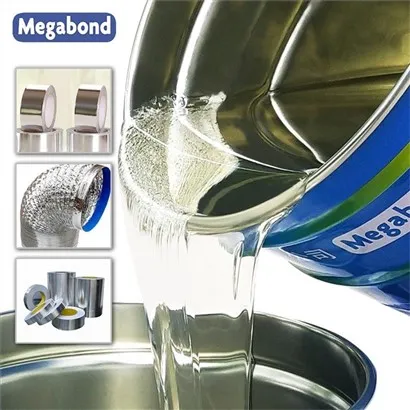


Hey there! As a supplier of water based lamination adhesive, I've seen firsthand the importance of enhancing its water resistance. In this blog, I'm gonna share some tips and tricks on how to do just that.
Understanding the Basics of Water Based Lamination Adhesive
First off, let's talk a bit about what water based lamination adhesive is. It's an adhesive that uses water as a solvent instead of harmful chemicals. This makes it more environmentally friendly and safer to use. It's commonly used in packaging, printing, and other industries where laminating different materials together is required.
But here's the deal: water based adhesives can be a bit tricky when it comes to water resistance. Since they have water in them, they're naturally more susceptible to water damage. However, with the right techniques and additives, we can significantly improve their water - resistant properties.
Choosing the Right Resin
The resin is the heart of the adhesive. It's what gives the adhesive its bonding strength and other properties. When it comes to enhancing water resistance, choosing the right resin is crucial.
Some resins are inherently more water - resistant than others. For example, acrylic resins are a popular choice for water based lamination adhesives. They offer good adhesion, flexibility, and relatively high water resistance. Our Water-based Acrylic Laminating Adhesive is a great example. It has been formulated to provide excellent bonding and decent water resistance right out of the box.
Another option is polyurethane resins. They can provide even better water resistance, especially in high - humidity environments. Polyurethane - based water based adhesives are known for their durability and resistance to water penetration. However, they can be a bit more expensive than acrylic resins.
Adding Cross - Linking Agents
Cross - linking agents are substances that can create chemical bonds between the polymer chains in the adhesive. This forms a three - dimensional network that can significantly improve the water resistance of the adhesive.
When a cross - linking reaction occurs, the adhesive becomes more resistant to water because the water molecules have a harder time breaking through the tightly bonded polymer network. There are different types of cross - linking agents available, such as isocyanates and melamine - formaldehyde resins.
However, using cross - linking agents requires careful consideration. They need to be added in the right amount, and the reaction conditions (like temperature and time) need to be controlled. If not, it can lead to issues like reduced flexibility or poor adhesion.
Surface Treatment of Substrates
The surface of the substrates being laminated also plays a big role in the water resistance of the adhesive bond. If the substrate has a rough or porous surface, the adhesive may not form a strong, water - tight seal.
One way to improve the situation is to pre - treat the substrates. For example, applying a primer can help to fill in the pores on the surface and provide a smoother, more uniform surface for the adhesive to bond to. Some primers are also formulated to enhance the water resistance of the overall laminate.


Another option is to use corona treatment or plasma treatment on the substrate surface. These treatments can increase the surface energy of the substrate, making it more receptive to the adhesive and improving the bonding strength. This, in turn, can enhance the water resistance of the laminated structure.
Controlling the Drying Process
The drying process of the water based lamination adhesive is crucial for its water resistance. If the adhesive doesn't dry properly, it can leave behind water molecules within the adhesive layer, which can reduce its water - resistant properties.
It's important to control the temperature and humidity during the drying process. A higher temperature can speed up the evaporation of water from the adhesive, but it needs to be within a reasonable range. If the temperature is too high, it can cause the adhesive to dry too quickly on the surface, forming a skin that traps water inside.
On the other hand, a low - humidity environment can also help to promote faster and more complete drying. Using dehumidifiers in the drying area can be a good idea, especially in areas with high ambient humidity.
Testing and Quality Control
Once you've made the changes to enhance the water resistance of your water based lamination adhesive, it's important to test it thoroughly. There are several tests that can be used to evaluate the water resistance of the adhesive.
One common test is the water immersion test. In this test, a sample of the laminated material is immersed in water for a certain period of time, and then the adhesive bond is evaluated for any signs of delamination or degradation. Another test is the humidity test, where the sample is exposed to a high - humidity environment for an extended period.
Regular quality control checks are essential to ensure that the adhesive consistently meets the desired water - resistance standards. This can help to catch any issues early on and make adjustments as needed.
Conclusion
Enhancing the water resistance of water based lamination adhesive is a multi - faceted process. It involves choosing the right resin, adding cross - linking agents, treating the substrates, controlling the drying process, and conducting thorough testing.
As a supplier, we're always looking for ways to improve the performance of our adhesives. If you're in the market for a high - quality water based lamination adhesive with excellent water resistance, we'd love to have a chat with you. Whether you're in the packaging, printing, or any other industry that requires laminating, we can work together to find the best solution for your needs. So, don't hesitate to reach out and start a conversation about your adhesive requirements.
References
- "Handbook of Adhesive Technology" by Skeist, I.
- "Adhesives and Sealants Technology" by Mittal, K. L.