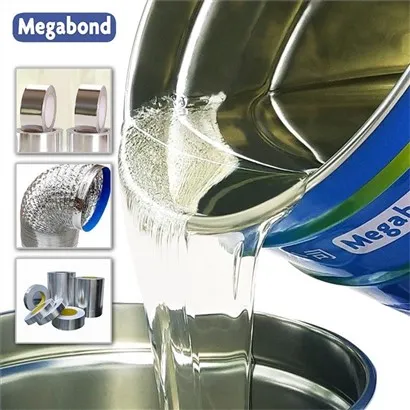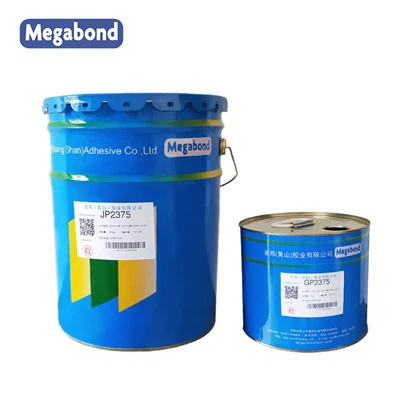


In the packaging industry, water-based lamination adhesives have gained significant popularity due to their environmental friendliness, low odor, and excellent bonding properties. However, one of the challenges faced by these adhesives is their relatively low UV resistance, which can lead to discoloration, degradation, and reduced bond strength when exposed to sunlight or UV light sources. As a leading water-based lamination adhesive supplier, we understand the importance of addressing this issue to meet the diverse needs of our customers. In this blog post, we will explore various strategies to improve the UV resistance of water-based lamination adhesives.
Understanding the Mechanism of UV Degradation
Before delving into the solutions, it is essential to understand how UV light affects water-based lamination adhesives. UV radiation has high energy that can break chemical bonds in the adhesive polymers. This process, known as photodegradation, leads to the formation of free radicals. These free radicals can react with oxygen in the air, causing oxidation of the adhesive. Oxidation results in the yellowing of the adhesive, loss of mechanical properties such as flexibility and strength, and ultimately, a decrease in the adhesive's ability to bond materials effectively.
Selection of High - Performance Resins
The choice of resin is a crucial factor in determining the UV resistance of water-based lamination adhesives. Some resins are inherently more resistant to UV radiation than others. For example, Water-based Acrylic Laminating Adhesive has shown relatively good UV resistance compared to other types of water-based resins. Acrylic polymers have a stable chemical structure that can withstand the energy of UV light to a certain extent.
When selecting an acrylic resin for the adhesive formulation, it is important to consider its molecular weight, glass transition temperature (Tg), and cross - linking density. Higher molecular weight resins generally offer better UV resistance as they have more stable chemical bonds. A proper Tg is also necessary; if the Tg is too low, the adhesive may be too soft and more prone to degradation under UV exposure. Cross - linking can further enhance the UV resistance of the resin by forming a three - dimensional network that restricts the movement of polymer chains and makes it more difficult for UV light to break the bonds.
Incorporation of UV Absorbers
UV absorbers are chemicals that can absorb UV radiation and convert it into heat energy, thereby protecting the adhesive polymer from direct UV damage. There are two main types of UV absorbers: organic and inorganic.
Organic UV Absorbers
Organic UV absorbers, such as benzotriazoles and benzophenones, are commonly used in water-based lamination adhesives. Benzotriazoles work by absorbing UV light in the 290 - 400 nm range and dissipating the energy through a non - radiative process. Benzophenones, on the other hand, can absorb a broader range of UV wavelengths. These organic UV absorbers can be added to the adhesive formulation during the manufacturing process. However, their effectiveness may be limited over time as they can undergo photochemical reactions themselves and lose their ability to absorb UV light.

Inorganic UV Absorbers
Inorganic UV absorbers, such as titanium dioxide (TiO₂) and zinc oxide (ZnO), are also popular choices. TiO₂ and ZnO can scatter and absorb UV light, providing a physical barrier against UV radiation. They are more stable than organic UV absorbers and can offer long - term UV protection. When using inorganic UV absorbers, it is important to ensure proper dispersion in the water-based adhesive to avoid agglomeration, which can affect the adhesive's bonding performance and appearance.
Addition of Antioxidants
Antioxidants play a vital role in preventing the oxidation of the adhesive polymer that occurs as a result of UV exposure. Oxidation can lead to the formation of peroxides and other reactive species that can break down the polymer chains. By adding antioxidants to the water-based lamination adhesive, we can scavenge free radicals and prevent the oxidation process.
There are different types of antioxidants, including primary antioxidants (such as hindered phenols) and secondary antioxidants (such as phosphites). Primary antioxidants react with free radicals to form stable compounds, while secondary antioxidants decompose peroxides into non - reactive products. A combination of primary and secondary antioxidants is often used to achieve the best results in terms of UV resistance and long - term stability of the adhesive.
Surface Coating and Protection
Another approach to improving the UV resistance of water-based lamination adhesives is to apply a protective surface coating. A clear UV - resistant coating can be applied over the laminated surface to shield the adhesive from direct UV exposure. This coating can be formulated with high - performance polymers and UV absorbers to provide an additional layer of protection.

There are various types of surface coatings available, such as acrylic - based coatings and polyurethane - based coatings. Acrylic coatings are known for their good weatherability and transparency, while polyurethane coatings offer excellent abrasion resistance and flexibility. The choice of coating depends on the specific requirements of the application, such as the type of substrate, the expected level of UV exposure, and the desired appearance of the final product.
Process Optimization
In addition to the formulation aspects, the manufacturing and application processes of water-based lamination adhesives can also affect their UV resistance. During the manufacturing process, proper mixing and dispersion of the ingredients are crucial to ensure uniform distribution of UV absorbers, antioxidants, and other additives. Inadequate mixing can lead to local variations in the adhesive's properties, which may result in uneven UV resistance.
The application process also needs to be optimized. For example, the thickness of the adhesive layer can impact its UV resistance. A thicker adhesive layer may provide better protection against UV radiation, but it may also affect the flexibility and appearance of the laminated product. The drying conditions, such as temperature and humidity, during the lamination process can also influence the final properties of the adhesive. Proper curing of the adhesive is essential to develop its full bonding strength and UV resistance.
Testing and Quality Control
To ensure the effectiveness of the strategies used to improve the UV resistance of water-based lamination adhesives, rigorous testing and quality control are necessary. There are several standard test methods available for evaluating the UV resistance of adhesives, such as the ASTM G154 test, which exposes the adhesive samples to artificial UV light under controlled conditions.
In addition to laboratory tests, real - world exposure tests can also be conducted. Samples of the laminated products can be placed in outdoor environments with high UV exposure for a certain period of time. The changes in color, bond strength, and other properties of the adhesive can then be evaluated. By regularly testing and monitoring the UV resistance of our products, we can ensure that they meet the high - quality standards expected by our customers.

Conclusion
Improving the UV resistance of water - based lamination adhesives is a complex but achievable goal. By carefully selecting high - performance resins, incorporating UV absorbers and antioxidants, applying protective surface coatings, optimizing the manufacturing and application processes, and conducting thorough testing and quality control, we can significantly enhance the UV resistance of our adhesives.
As a water - based lamination adhesive supplier, we are committed to providing our customers with products that offer excellent UV resistance and meet their specific packaging needs. If you are interested in learning more about our water - based lamination adhesives or would like to discuss your requirements for UV - resistant adhesives, we encourage you to contact us for further information and to initiate a procurement discussion.
References
- ASTM International. ASTM G154 - 16a, Standard Practice for Operating Fluorescent Ultraviolet (UV) Lamp Apparatus for Exposure of Non - metallic Materials. West Conshohocken, PA: ASTM International, 2016.
- Wypych, G. Handbook of UV Degradation and Stabilization. William Andrew Publishing, 2012.
- Mittal, K. L. Adhesion Science and Engineering: Surfaces, Chemistry, and Applications. Elsevier, 2006.