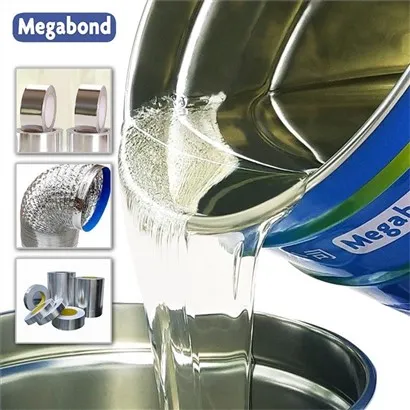


What is the effect of temperature on the viscosity of water based acrylic adhesives?
As a supplier of water-based acrylic adhesives, I've witnessed firsthand the crucial role that temperature plays in determining the viscosity of these adhesives. Viscosity, in simple terms, refers to a fluid's resistance to flow. In the context of water-based acrylic adhesives, it is a key property that affects their application, performance, and overall quality. Understanding how temperature influences viscosity is essential for ensuring optimal use of these adhesives in various industries, from packaging to woodworking.

The Basics of Viscosity and Temperature Relationship
Before delving into the specific effects of temperature on water-based acrylic adhesives, it's important to understand the general relationship between viscosity and temperature. In most fluids, including adhesives, viscosity decreases as temperature increases. This is because higher temperatures provide more energy to the molecules in the fluid, allowing them to move more freely and reducing the internal friction that causes resistance to flow. Conversely, as the temperature decreases, the molecules have less energy, move more slowly, and the fluid becomes more viscous.
This relationship can be described by the Arrhenius equation, which shows an exponential decrease in viscosity with increasing temperature. However, the exact relationship for water-based acrylic adhesives is more complex due to their unique chemical composition and the presence of various additives.
Effects of Temperature on Water-Based Acrylic Adhesives
Low Temperatures
At low temperatures, water-based acrylic adhesives tend to become more viscous. This increased viscosity can make the adhesive difficult to apply, as it may not flow smoothly onto the substrate. For example, in a packaging application where the adhesive is used to bond layers of cardboard, a highly viscous adhesive at low temperatures may not spread evenly, resulting in uneven bonding and potentially weak joints.
Moreover, low temperatures can also cause the adhesive to gel or thicken over time. This is due to the reduced mobility of the polymer chains in the adhesive, which can lead to aggregation and the formation of a more rigid structure. If the adhesive gels, it may become unusable and require heating or other measures to restore its original properties.
High Temperatures
On the other hand, high temperatures can have the opposite effect, reducing the viscosity of water-based acrylic adhesives. While this may seem beneficial in terms of ease of application, it can also lead to several problems. One of the main issues is that a low-viscosity adhesive may not have sufficient body to hold the substrates together effectively. In a woodworking application, for instance, a too-thin adhesive may not provide enough bonding strength, causing the joints to come apart over time.
High temperatures can also cause the water in the adhesive to evaporate more quickly. This can lead to a change in the adhesive's composition, as the concentration of the polymer and other additives increases. As a result, the adhesive may become brittle and lose its flexibility, which can affect its performance in applications where flexibility is required, such as in the bonding of flexible packaging materials.
Controlling Viscosity Through Temperature Management
To ensure optimal performance of water-based acrylic adhesives, it is essential to control the temperature during both storage and application. Here are some practical tips for managing temperature and viscosity:
Storage
- Temperature-Controlled Storage: Store the adhesives in a temperature-controlled environment to prevent extreme temperature fluctuations. This can help maintain the adhesive's viscosity and other properties over time.
- Avoid Freezing: Water-based acrylic adhesives should never be frozen, as freezing can cause the polymer particles to separate and the adhesive to lose its effectiveness.
Application
- Preheating: If the adhesive is too viscous at the application temperature, it can be preheated to reduce its viscosity. However, it is important to follow the manufacturer's guidelines regarding the maximum allowable temperature to avoid damaging the adhesive.
- Ambient Temperature Control: Maintain a consistent ambient temperature during the application process. This can help ensure that the adhesive has the desired viscosity and performs consistently.
The Importance of Viscosity in Different Applications
The viscosity of water-based acrylic adhesives is critical in various applications. For example, in the Water-based Acrylic Laminating Adhesive application, the right viscosity is essential for achieving a smooth and even lamination. A too-high viscosity may result in air bubbles or uneven bonding, while a too-low viscosity may cause the adhesive to run off the edges.
In the automotive industry, where water-based acrylic adhesives are used for bonding interior components, the viscosity affects the adhesive's ability to fill gaps and provide strong bonding. A viscous adhesive can better hold the components in place during the curing process, ensuring a durable bond.
Conclusion
In conclusion, temperature has a significant effect on the viscosity of water-based acrylic adhesives. Understanding this relationship is crucial for ensuring the optimal performance of these adhesives in various applications. By managing temperature during storage and application, it is possible to control the viscosity and achieve the desired bonding results.
If you are in the market for high-quality water-based acrylic adhesives and need more information on how temperature affects their performance, or if you have specific application requirements, I encourage you to reach out to us. We are committed to providing you with the best adhesive solutions tailored to your needs. Contact us today to start a discussion about your procurement needs and explore how our water-based acrylic adhesives can meet your requirements.
References
- Bird, R. B., Stewart, W. E., & Lightfoot, E. N. (2002). Transport Phenomena. John Wiley & Sons.
- Van Wazer, J. R., Lyons, J. W., Kimball, K. Y., & Colwell, R. E. (1963). Viscosity and Flow Measurement. Interscience Publishers.
- ASTM International. (2018). Standard Test Methods for Viscosity of Adhesives. ASTM D2196 - 18.