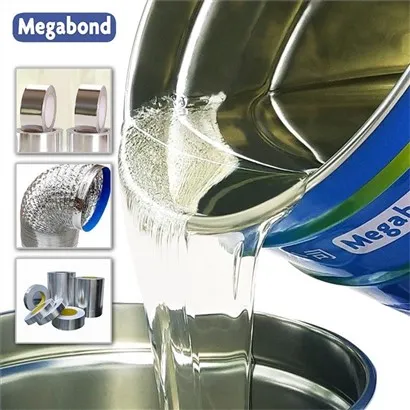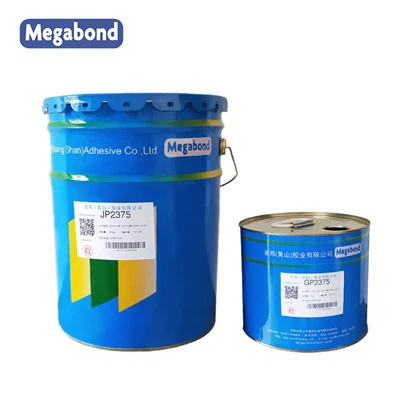


As a supplier of Solvent Free Polyurethane Adhesive, I've witnessed firsthand the growing demand for this remarkable product in various industries. One of the most frequently asked questions by our clients is about the pressure resistance of Solvent Free Polyurethane Adhesive. In this blog, I'll delve into this topic, exploring the factors that influence its pressure resistance and how it stands up in real - world applications.
Understanding Solvent Free Polyurethane Adhesive
Solvent Free Polyurethane Adhesive, as the name suggests, is an adhesive that does not contain any solvents. This makes it an environmentally friendly option compared to traditional solvent - based adhesives. It is composed of two main components: a polyol and an isocyanate. When these two components are mixed, a chemical reaction occurs, forming a strong and durable bond.
The absence of solvents in this adhesive offers several advantages. Firstly, it reduces the risk of volatile organic compound (VOC) emissions, which are harmful to the environment and human health. Secondly, it allows for faster curing times, as there is no need to wait for the solvent to evaporate. This can significantly increase production efficiency in industrial settings. You can explore our range of solvent - free adhesives on our website, including Solvent - free Polyether Laminating Adhesive, Solvent - free 100℃ Anti - Cooking Laminating Adhesive, and Solvent - free Aluminum Foil To Films Laminating Adhesive.
Factors Affecting Pressure Resistance
The pressure resistance of Solvent Free Polyurethane Adhesive is influenced by several key factors.
Chemical Composition
The ratio of the polyol to the isocyanate in the adhesive formulation plays a crucial role in determining its pressure resistance. A well - balanced ratio ensures optimal cross - linking between the molecules, resulting in a stronger and more pressure - resistant bond. Different applications may require different ratios, and our technical team can assist you in selecting the most suitable formulation for your specific needs.
Curing Process
The curing conditions, such as temperature and humidity, can have a significant impact on the pressure resistance of the adhesive. Higher temperatures generally accelerate the curing process, leading to a more complete cross - linking of the molecules. However, extreme temperatures can also cause premature curing or degradation of the adhesive. Humidity can also affect the curing process, as water can react with the isocyanate component in the adhesive. It is essential to control the curing environment carefully to ensure optimal pressure resistance.
Substrate Properties
The type and surface properties of the substrates being bonded also affect the pressure resistance of the adhesive. Porous substrates tend to absorb some of the adhesive, which can weaken the bond. Smooth and clean substrates provide a better surface for the adhesive to adhere to, resulting in a stronger bond. Surface treatment of the substrates, such as sanding or priming, can improve the adhesion and pressure resistance of the adhesive.
Pressure Resistance in Different Applications
Solvent Free Polyurethane Adhesive is widely used in various industries, and its pressure resistance is crucial in ensuring the performance of the bonded products.


Packaging Industry
In the packaging industry, Solvent Free Polyurethane Adhesive is used for laminating different layers of packaging materials, such as films and foils. The adhesive must be able to withstand the pressure exerted during the packaging process, such as filling, sealing, and transportation. Our Solvent - free Polyether Laminating Adhesive is specifically designed for this application, providing excellent pressure resistance and ensuring the integrity of the packaging.
Automotive Industry
In the automotive industry, this adhesive is used for bonding various components, such as interior trim parts and body panels. These components are subjected to significant pressure and vibrations during vehicle operation. The pressure resistance of the adhesive is essential to prevent the components from coming loose or separating. Our Solvent Free Polyurethane Adhesive has been tested and proven to meet the high - pressure requirements of the automotive industry.
Construction Industry
In the construction industry, Solvent Free Polyurethane Adhesive is used for bonding building materials, such as insulation panels and flooring. The adhesive must be able to withstand the weight and pressure of the building structure. Our Solvent - free Aluminum Foil To Films Laminating Adhesive can be used in construction applications where high - pressure resistance is required.
Testing the Pressure Resistance
To ensure the quality and pressure resistance of our Solvent Free Polyurethane Adhesive, we conduct a series of rigorous tests.
Shear Strength Testing
Shear strength testing measures the ability of the adhesive to resist forces that act parallel to the bond line. A sample of the bonded substrates is subjected to a gradually increasing shear force until the bond fails. The maximum shear force that the bond can withstand is recorded as the shear strength.
Tensile Strength Testing
Tensile strength testing measures the ability of the adhesive to resist forces that act perpendicular to the bond line. A sample of the bonded substrates is pulled apart at a constant rate until the bond fails. The maximum tensile force that the bond can withstand is recorded as the tensile strength.
Peel Strength Testing
Peel strength testing measures the ability of the adhesive to resist forces that try to separate the bonded substrates at an angle. A sample of the bonded substrates is peeled apart at a constant rate, and the force required to peel the substrates is recorded as the peel strength.
Conclusion
The pressure resistance of Solvent Free Polyurethane Adhesive is a critical property that depends on various factors, including chemical composition, curing process, and substrate properties. Our company, as a leading supplier of Solvent Free Polyurethane Adhesive, is committed to providing high - quality products with excellent pressure resistance. We offer a wide range of adhesive formulations to meet the diverse needs of different industries.
If you are interested in learning more about our Solvent Free Polyurethane Adhesive or would like to discuss your specific application requirements, please feel free to contact us. Our experienced sales and technical teams are ready to assist you in finding the best adhesive solution for your project.
References
- ASTM International. Standard Test Methods for Shear Strength of Adhesives.
- ISO Standards. Adhesives - Determination of Tensile Lap - Shear Strength of Rigid-to - Rigid Bonded Assemblies.
- Peel Testing: A Guide to Understanding and Conducting Peel Tests on Adhesives.