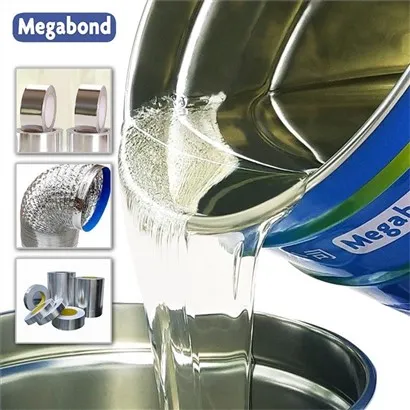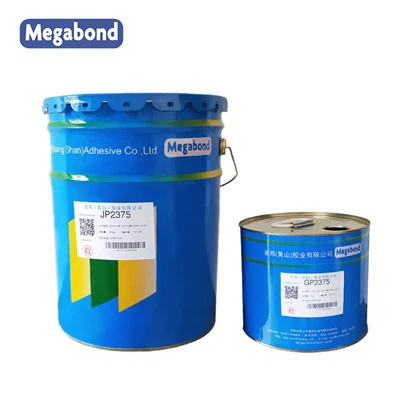


As a seasoned supplier of Polyether lamination Adhesive, I've often encountered various inquiries regarding the diverse applications of our product. One question that has piqued my interest lately is whether Polyether lamination Adhesive can be used for bonding mica. In this blog, I'll delve into the properties of both Polyether lamination Adhesive and mica, explore the potential for bonding, and discuss the implications of such an application.
Understanding Polyether Lamination Adhesive
Polyether lamination Adhesive is a type of solvent - free polyurethane adhesive that offers several advantages in the field of lamination. Our Solvent - free Polyether Laminating Adhesive is known for its excellent adhesion to a wide range of substrates, high flexibility, and good chemical resistance. It is commonly used in the packaging industry for laminating different types of films, such as polyethylene, polypropylene, and polyester, to create multi - layer packaging structures.
The chemical structure of polyether - based adhesives provides them with unique properties. The polyether segments in the adhesive molecule contribute to its flexibility, which allows it to withstand mechanical stresses during the lamination process and in the final product. Additionally, these adhesives have a relatively low viscosity, which makes them easy to apply and ensures good wetting of the substrate surfaces.
Properties of Mica
Mica is a group of silicate minerals that are characterized by their excellent electrical insulation, high thermal stability, and good mechanical strength. Mica sheets are often used in electrical and electronic applications, such as in capacitors, transformers, and heating elements. Mica has a layered structure, with individual layers held together by weak van der Waals forces. This structure gives mica its characteristic cleavage, allowing it to be split into thin, flexible sheets.
The surface of mica is relatively smooth and non - porous, which can pose challenges when it comes to adhesion. However, mica also has some polar groups on its surface, which can potentially interact with the adhesive molecules.
The Potential for Bonding Mica with Polyether Lamination Adhesive
The key to successful bonding between two materials lies in the ability of the adhesive to wet the substrate surface and form strong chemical or physical bonds. In the case of mica and Polyether lamination Adhesive, several factors need to be considered.
Adhesion Mechanisms
There are two main types of adhesion mechanisms: mechanical adhesion and chemical adhesion. Mechanical adhesion occurs when the adhesive penetrates into the pores or irregularities of the substrate surface, creating a mechanical interlock. As mica has a smooth and non - porous surface, mechanical adhesion is likely to be limited.
Chemical adhesion, on the other hand, involves the formation of chemical bonds between the adhesive and the substrate. The polar groups on the mica surface can potentially react with the functional groups in the Polyether lamination Adhesive, such as the isocyanate groups in the polyurethane adhesive. This chemical interaction can lead to the formation of strong covalent or hydrogen bonds, which are essential for good adhesion.
Compatibility of Properties
The properties of the adhesive and the substrate need to be compatible for a successful bond. Mica has high thermal stability, and it is important that the adhesive can maintain its adhesion properties at elevated temperatures. Our Solvent - free 121℃ Retortable Laminating Adhesive is designed to withstand high - temperature processing, which makes it a potential candidate for bonding mica in applications where heat resistance is required.
In addition, mica is often used in applications where it may be exposed to chemicals or moisture. The chemical resistance of Polyether lamination Adhesive can help to protect the bond from degradation in such environments. For example, our Solvent - free 100℃ Anti - Cooking Laminating Adhesive has good resistance to water and chemicals, which can be beneficial when bonding mica in harsh conditions.
Experimental Considerations
To determine whether Polyether lamination Adhesive can be used for bonding mica, a series of experiments need to be conducted. These experiments should include the following steps:
Surface Preparation
The surface of mica should be cleaned to remove any contaminants, such as dust or grease, which can affect the adhesion. A simple cleaning process using a mild solvent, such as isopropyl alcohol, can be sufficient. In some cases, surface treatment techniques, such as plasma treatment or corona treatment, may be used to increase the surface energy of mica and improve the wetting of the adhesive.
Adhesive Application
The Polyether lamination Adhesive should be applied evenly on the mica surface using a suitable application method, such as roll coating or spray coating. The thickness of the adhesive layer should be carefully controlled to ensure good adhesion without excessive build - up.
Curing Conditions
The curing process of the adhesive is crucial for achieving optimal adhesion. The curing temperature and time should be selected based on the specifications of the adhesive. In general, polyurethane adhesives require a certain amount of time and temperature to fully cure and develop their adhesive properties.
Adhesion Testing
After the adhesive has cured, the bond strength between the mica and the adhesive should be tested. Common adhesion tests include the peel test, where the force required to peel the adhesive from the mica surface is measured, and the shear test, where the force required to shear the bond is determined.
Applications of Bonded Mica
If Polyether lamination Adhesive can be successfully used to bond mica, there are several potential applications. In the electrical industry, bonded mica sheets can be used to create more complex electrical insulation structures. For example, mica sheets can be laminated with other insulating materials using the adhesive to improve the overall insulation performance.
In the thermal management field, mica's high thermal conductivity can be combined with the flexibility of the adhesive to create heat - conducting structures. These structures can be used in electronic devices to dissipate heat more effectively.
Conclusion
In conclusion, while there are challenges in bonding mica with Polyether lamination Adhesive due to the smooth and non - porous surface of mica, there is also potential for a successful bond based on the chemical interaction between the adhesive and the mica surface. Through proper surface preparation, adhesive application, and curing conditions, it is possible to achieve good adhesion.
Our company, as a supplier of Polyether lamination Adhesive, is committed to providing high - quality products and technical support for customers who are interested in exploring new applications, such as bonding mica. If you are considering using our adhesive for bonding mica or have any other related questions, we encourage you to contact us for further discussion and to start a procurement negotiation.


References
- “Handbook of Adhesives and Sealants”, Second Edition, Edited by Henry S. Katz and Allan W. Lee.
- “Mica: Properties, Processing, and Applications”, by Robert C. Roy and John W. Weir.
- “Polyurethane Adhesives: Chemistry, Technology, and Applications”, by Dieter Dieterich and Klaus Uhlig.