

Hey there! As a supplier of solvent-based laminating adhesive, I often get asked about one key question: What is the drying time of solvent-based laminating adhesive? Well, let's dig into this topic and find out all the ins and outs.
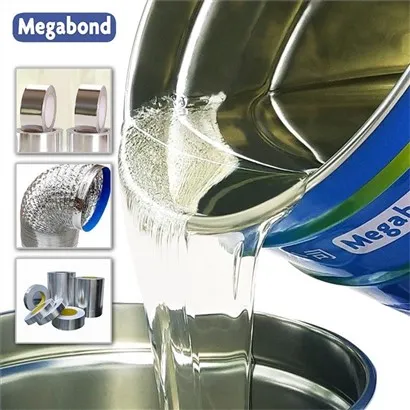
First off, what exactly is solvent-based laminating adhesive? It's a type of adhesive that uses solvents to dissolve the resin and other components. This allows it to be in a liquid state, making it easy to apply between different layers of materials during the lamination process. Once applied, the solvent needs to evaporate for the adhesive to set and create a strong bond.
Now, the drying time of solvent-based laminating adhesive isn't set in stone. It can vary depending on a bunch of factors. One of the most important factors is the type of solvent used. Different solvents have different evaporation rates. For example, some solvents with lower boiling points will evaporate more quickly than those with higher boiling points. So, if an adhesive uses a solvent with a low boiling point, it'll generally dry faster.
The thickness of the adhesive layer also plays a huge role. If you apply a thick layer of the adhesive, it'll take longer for the solvent to evaporate compared to a thin layer. That's because there's more solvent in a thick layer that needs to escape. Think of it like trying to dry a thick towel versus a thin one. The thick towel will take much longer to dry.
Another factor is the temperature and humidity of the environment. Higher temperatures usually speed up the evaporation process. When it's hot, the solvent molecules gain more energy and are more likely to break free from the adhesive and turn into vapor. On the other hand, high humidity can slow down the drying time. The air is already saturated with water vapor, so there's less room for the solvent vapor to go, which makes it harder for the solvent to evaporate.
The type of substrate, or the materials being laminated, can also affect the drying time. Some substrates are more porous than others. Porous substrates can absorb some of the solvent, which can either speed up or slow down the drying process depending on how well the substrate can release the absorbed solvent. For instance, if a substrate absorbs the solvent but then quickly releases it into the air, it might actually help with the drying. But if it holds onto the solvent for a long time, it'll increase the drying time.


Let's talk about some of the products we offer as a solvent-based laminating adhesive supplier. We have the Solvent-based 121℃ Anti-Retorting PU Laminating Adhesive. This adhesive is designed for applications where the laminated materials need to withstand retorting processes at 121℃. Its drying time is optimized to balance the need for quick processing and strong bonding.
Our Solvent-based Low Cost Laminating Adhesive is a great option for those looking for an affordable solution. Despite its low cost, it still has decent drying properties. We've formulated it to dry relatively fast, which can save you time and money in the production process.
And then there's the Solvent-based Anti-Additives Laminating Adhesive. This adhesive is ideal for applications where you want to avoid using certain additives. It has a unique formula that allows for a reasonable drying time while providing a strong and reliable bond.
In general, under normal conditions (around 25℃ and 50% humidity), a thin layer of our solvent-based laminating adhesives can dry in about 10 - 30 minutes. But if you increase the thickness of the layer or change the environmental conditions, the drying time can go up to several hours.
So, how can you control the drying time? If you need the adhesive to dry faster, you can increase the temperature in the drying area. You can use fans to improve air circulation, which helps carry away the solvent vapor. On the other hand, if you need to slow down the drying time, you can lower the temperature or increase the humidity.
It's also important to note that the initial drying time, when the adhesive feels dry to the touch, isn't the same as the curing time. Curing is when the adhesive reaches its full strength and bonding properties. The curing time can be longer than the drying time and can take anywhere from a few hours to a few days, depending on the adhesive formulation.
As a supplier, we understand that every customer has different needs when it comes to drying time. That's why we offer a range of solvent-based laminating adhesives with different drying characteristics. Whether you need a fast-drying adhesive for high-speed production or a slower-drying one for more complex lamination processes, we've got you covered.
If you're in the market for solvent-based laminating adhesive and want to learn more about our products, their drying times, and how they can fit your specific needs, don't hesitate to reach out. We're here to help you find the perfect adhesive solution for your business.
References
- Principles of Adhesion and Adhesive Technology, Second Edition by C. A. Dostal
- Handbook of Adhesive Technology, Second Edition edited by A. Pizzi and K. L. Mittal