

In the realm of food packaging, the choice of lamination adhesive is a critical decision that can significantly impact the safety, quality, and functionality of the final product. As a supplier of solvent-based lamination adhesives, I often encounter questions from customers regarding the suitability of our products for food packaging applications. In this blog post, I will delve into the topic of whether solvent-based lamination adhesives can be used for food packaging, exploring the advantages, challenges, and regulatory considerations associated with their use.
Advantages of Solvent-Based Lamination Adhesives in Food Packaging
Solvent-based lamination adhesives offer several advantages that make them attractive for food packaging applications. Firstly, they provide excellent adhesion to a wide range of substrates, including plastics, metals, and paper. This versatility allows for the creation of multi-layered packaging structures with enhanced barrier properties, protecting the food from moisture, oxygen, light, and other external factors that can cause spoilage or degradation.
Secondly, solvent-based adhesives offer superior chemical resistance, ensuring that the packaging remains intact and functional even when in contact with acidic, alkaline, or fatty foods. This is particularly important for packaging applications where the food may contain high levels of salt, sugar, or other additives that can react with the adhesive and compromise its performance.
Thirdly, solvent-based adhesives provide excellent heat resistance, making them suitable for use in applications where the packaging may be subjected to high temperatures during processing, storage, or transportation. This is especially important for food products that require sterilization or pasteurization, as the adhesive must be able to withstand the high temperatures without melting, degrading, or releasing harmful substances.
Finally, solvent-based lamination adhesives offer a high degree of flexibility and durability, allowing the packaging to withstand the rigors of handling, shipping, and storage without delaminating or breaking. This ensures that the food remains protected and secure throughout its shelf life, reducing the risk of contamination or spoilage.
Challenges and Considerations
While solvent-based lamination adhesives offer many advantages for food packaging applications, there are also some challenges and considerations that need to be taken into account. One of the main concerns is the potential for solvent residues to remain in the adhesive after the drying process, which can pose a risk to human health if they migrate into the food. To address this issue, it is important to use adhesives that are specifically formulated for food contact applications and comply with relevant food safety regulations.
Another challenge is the environmental impact of solvent-based adhesives. The solvents used in these adhesives are typically volatile organic compounds (VOCs), which can contribute to air pollution and have a negative impact on the environment. To minimize the environmental impact, it is important to use adhesives that have a low VOC content and to implement proper ventilation and emission control measures during the manufacturing process.
In addition, solvent-based adhesives require a longer drying time compared to other types of adhesives, which can increase the production time and cost. This can be a significant challenge for manufacturers who need to produce large quantities of food packaging in a short period of time. To address this issue, it is important to use adhesives that have a fast drying time and to optimize the drying process to ensure that the adhesive is fully cured before the packaging is used.
Regulatory Considerations
The use of solvent-based lamination adhesives in food packaging is subject to strict regulatory requirements to ensure the safety of the food and the consumers. In the United States, the Food and Drug Administration (FDA) regulates the use of adhesives in food contact applications under the Federal Food, Drug, and Cosmetic Act (FD&C Act) and the Code of Federal Regulations (CFR). The FDA has established specific requirements for the composition, use, and labeling of adhesives that are intended for food contact, including limits on the amount of certain substances that can be present in the adhesive and requirements for testing and certification.
In the European Union, the use of adhesives in food packaging is regulated by the European Food Safety Authority (EFSA) and the European Union's Framework Regulation (EC) No 1935/2004 on materials and articles intended to come into contact with food. The EFSA has established specific requirements for the safety assessment of adhesives that are intended for food contact, including the evaluation of the potential for migration of substances from the adhesive into the food and the establishment of maximum migration limits for certain substances.
It is important for manufacturers and suppliers of solvent-based lamination adhesives to comply with these regulatory requirements to ensure the safety of their products and to avoid any legal issues or liability. To ensure compliance, it is recommended to work with a reputable adhesive supplier who has a proven track record of producing high-quality adhesives that meet the relevant regulatory requirements.
Our Solvent-Based Lamination Adhesives for Food Packaging
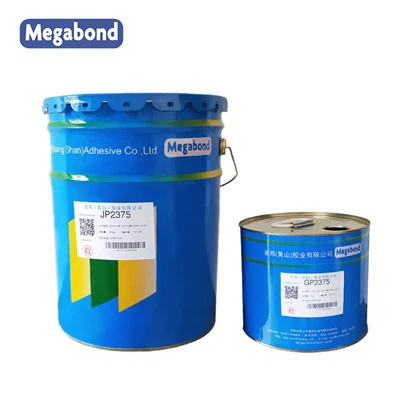
As a supplier of solvent-based lamination adhesives, we offer a range of products that are specifically formulated for food packaging applications. Our adhesives are designed to provide excellent adhesion, chemical resistance, heat resistance, and flexibility, while also meeting the strict regulatory requirements for food contact applications.
One of our popular products is the Solvent-based AL-plating Film Laminating Adhesive, which is specifically designed for use in applications where a high level of adhesion is required between an aluminum-plated film and other substrates. This adhesive provides excellent adhesion to a wide range of substrates, including plastics, metals, and paper, and offers superior chemical resistance and heat resistance.
Another product is the Solvent-based 125℃ Anti-Retorting Laminating Adhesive, which is specifically designed for use in applications where the packaging may be subjected to high temperatures during the retorting process. This adhesive provides excellent heat resistance and adhesion, ensuring that the packaging remains intact and functional even after being exposed to temperatures of up to 125℃.
We also offer a Solvent-based Film Laminating Adhesive, which is a versatile adhesive that can be used for a wide range of food packaging applications. This adhesive provides excellent adhesion to a variety of substrates, including plastics, metals, and paper, and offers superior chemical resistance and flexibility.
Conclusion
In conclusion, solvent-based lamination adhesives can be used for food packaging applications, provided that they are specifically formulated for food contact and comply with relevant food safety regulations. These adhesives offer several advantages, including excellent adhesion, chemical resistance, heat resistance, and flexibility, which make them suitable for a wide range of food packaging applications. However, it is important to take into account the potential challenges and considerations, such as the risk of solvent residues and the environmental impact, and to work with a reputable adhesive supplier who can provide high-quality adhesives that meet the relevant regulatory requirements.
If you are interested in learning more about our solvent-based lamination adhesives for food packaging applications, please feel free to contact us. We would be happy to discuss your specific requirements and provide you with a customized solution that meets your needs.


References
- Federal Food, Drug, and Cosmetic Act (FD&C Act)
- Code of Federal Regulations (CFR)
- European Food Safety Authority (EFSA)
- European Union's Framework Regulation (EC) No 1935/2004 on materials and articles intended to come into contact with food