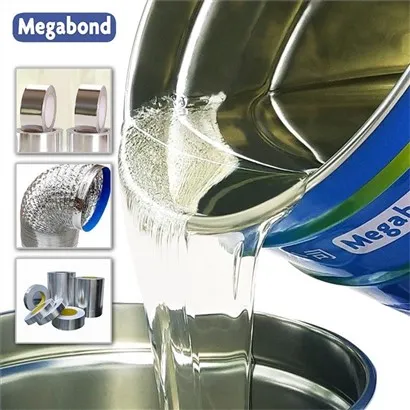


Controlling the amount of solvent laminating adhesive applied is a crucial aspect in the packaging and laminating industry. As a seasoned supplier of solvent laminating adhesives, I've witnessed firsthand the impact of precise adhesive application on the quality, efficiency, and cost - effectiveness of the laminating process. In this blog, I'll share some key strategies and considerations to help you achieve optimal adhesive application.
Understanding the Basics of Solvent Laminating Adhesive
Before delving into control methods, it's essential to understand the nature of solvent laminating adhesives. These adhesives are formulated with solvents that evaporate during the laminating process, leaving behind a strong bond between the substrates. The type of adhesive you choose depends on various factors such as the substrates being laminated, the end - use of the product, and the production environment.
We offer a wide range of solvent laminating adhesives, including Solvent - based 121℃ Anti - Steaming Laminating Adhesive, Solvent - based Economical Laminating Adhesive, and Solvent - based MET Plastic Film Laminating Adhesive. Each of these adhesives has unique properties and is suitable for different applications.
Factors Affecting Adhesive Application Amount
Substrate Characteristics
The type, texture, and porosity of the substrates play a significant role in determining the amount of adhesive needed. Porous substrates, such as paper or some types of non - woven materials, tend to absorb more adhesive compared to smooth and non - porous substrates like plastic films. For example, when laminating a paper substrate to a plastic film, you may need to apply a higher amount of adhesive to ensure proper bonding.
Lamination Speed
The speed at which the laminating process is carried out affects the adhesive application. Higher lamination speeds may require a higher adhesive application rate to ensure that enough adhesive is transferred to the substrates within the short time available. Conversely, slower speeds may allow for a more controlled and potentially lower adhesive application.
Adhesive Viscosity
The viscosity of the adhesive is another important factor. Higher - viscosity adhesives tend to stay in place better and may require less spreading, while lower - viscosity adhesives may spread more easily but can also drip or run off if not applied carefully. Adjusting the viscosity of the adhesive through temperature control or the addition of solvents can help in controlling the application amount.
Strategies for Controlling Adhesive Application Amount
Gravure Coating
Gravure coating is a commonly used method for applying solvent laminating adhesives. In this process, an engraved cylinder is used to pick up the adhesive from a bath and transfer it to the substrate. The depth and pattern of the engraving on the cylinder determine the amount of adhesive transferred. By choosing the appropriate engraving pattern and depth, you can precisely control the adhesive application amount.
Roll Coating
Roll coating involves using a series of rolls to apply the adhesive to the substrate. The pressure between the rolls and the speed of the rolls can be adjusted to control the amount of adhesive transferred. For example, increasing the pressure between the rolls will result in a higher adhesive application, while decreasing the pressure will reduce it.
Slot - Die Coating
Slot - die coating is a more precise method of adhesive application. In this process, the adhesive is forced through a narrow slot onto the substrate. The flow rate of the adhesive through the slot can be accurately controlled, allowing for very precise adhesive application amounts. This method is particularly useful for applications where a uniform and thin layer of adhesive is required.
Monitoring and Adjusting Adhesive Application
Visual Inspection
Regular visual inspection of the laminated products can help in detecting any issues with adhesive application. Look for signs of uneven adhesive distribution, such as streaks, bubbles, or areas where the substrates are not properly bonded. If you notice any such issues, you can adjust the adhesive application parameters accordingly.
Adhesive Thickness Measurement
Using tools such as a micrometer or a coating thickness gauge, you can measure the thickness of the adhesive layer on the laminated product. This provides a quantitative measure of the adhesive application amount and allows you to make more accurate adjustments. For example, if the measured adhesive thickness is higher than the desired value, you can reduce the adhesive application rate.
Process Data Analysis
Collecting and analyzing process data, such as lamination speed, adhesive flow rate, and pressure, can help in identifying trends and patterns in adhesive application. By analyzing this data over time, you can optimize the adhesive application process and make proactive adjustments to ensure consistent and optimal adhesive application amounts.
Cost - Benefit Analysis of Adhesive Application Control
Controlling the amount of adhesive applied not only improves the quality of the laminated products but also has significant cost - saving benefits. Using too much adhesive increases the raw material cost and can also lead to longer drying times, which in turn increases energy consumption and reduces production efficiency. On the other hand, using too little adhesive can result in poor bonding and product failure, leading to costly rework or customer complaints.
By precisely controlling the adhesive application amount, you can strike a balance between quality and cost. For example, by using the right amount of our Solvent - based Economical Laminating Adhesive, you can achieve excellent bonding results at a lower cost.
Environmental Considerations
When controlling the adhesive application amount, it's also important to consider the environmental impact. Using less adhesive reduces the amount of solvent emissions during the drying process, which is beneficial for the environment. Additionally, proper adhesive application control can reduce waste, as less adhesive is used and there is less chance of product rejection due to poor bonding.


Conclusion
Controlling the amount of solvent laminating adhesive applied is a complex but essential task in the laminating industry. By understanding the factors that affect adhesive application, using appropriate application methods, and implementing effective monitoring and adjustment strategies, you can achieve optimal adhesive application amounts. This not only improves the quality of your laminated products but also reduces costs and has a positive environmental impact.
If you are interested in learning more about our solvent laminating adhesives or need help in controlling the adhesive application amount for your specific application, we encourage you to contact us for a procurement discussion. Our team of experts is ready to assist you in finding the best solutions for your laminating needs.
References
- "Handbook of Laminating and Coating Technology" by Edward Cohen and Edgar Gutoff
- "Adhesives and Sealants Technology" by Robert L. Patrick
- Industry research reports on solvent laminating adhesives and their application methods.