

As a supplier of Solvent Free Polyurethane Adhesive, I often get asked about its minimum temperature tolerance. It's an important question, especially for industries that use our adhesives in environments with varying temperatures. In this blog, I'll share what I know based on my experience and the latest research.
First of all, Solvent Free Polyurethane Adhesives are known for their excellent performance in a wide range of applications due to their high bond strength, flexibility, and resistance to various chemicals. These adhesives are commonly used in packaging, automotive, and construction industries, among others. But when it comes to low - temperature performance, there are a few things to consider.
The minimum temperature that Solvent Free Polyurethane Adhesive can withstand varies depending on its formulation. Generally speaking, most of the standard Solvent Free Polyurethane Adhesives can function at temperatures as low as -20°C to -30°C. At these temperatures, the adhesive may become more rigid, but it still maintains enough flexibility to provide a reliable bond.
One of the key factors affecting the low - temperature performance is the type of polyol and isocyanate used in the adhesive's formulation. Different polyols have different glass transition temperatures (Tg). The glass transition temperature is the point at which the adhesive changes from a rubbery state to a glassy state. Polyols with lower Tg values tend to result in adhesives that can withstand lower temperatures.
For example, polyether - based polyols often offer better low - temperature performance compared to polyester - based polyols. Polyether chains are more flexible and have fewer polar groups, which means they are less likely to become too rigid at low temperatures. So, if you need an adhesive for use in a cold environment, an adhesive formulated with polyether polyols might be a better choice.
Another factor is the cross - linking density of the adhesive. A higher cross - linking density can increase the adhesive's strength and chemical resistance, but it can also make the adhesive more brittle at low temperatures. Adhesives with a moderate cross - linking density strike a balance between strength and low - temperature flexibility.
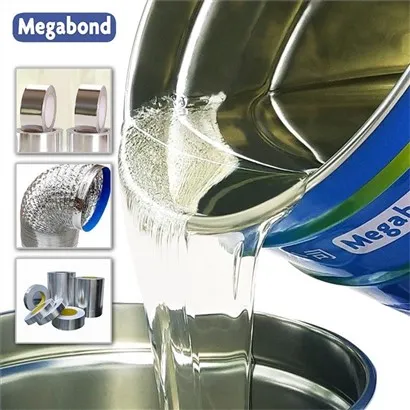
Let's take a look at some of our specific products and their low - temperature capabilities. The Solvent-free Aluminum Foil To Films Laminating Adhesive is designed for laminating aluminum foil to various films. It has a minimum working temperature of around -25°C. At this temperature, it can still provide a strong bond between the aluminum foil and the film, ensuring the integrity of the laminated structure.
Our Solvent-free 121℃ Retortable Laminating Adhesive is required to withstand high - temperature sterilization processes. However, it also has a decent low - temperature performance, with a minimum operating temperature of -20°C. This makes it suitable for products that may need to be stored or transported in cold environments.
The Solvent-free Anti-Chemicals Laminating Adhesive is formulated to resist the effects of various chemicals. It can function at temperatures as low as -30°C, which makes it a great option for applications where both chemical resistance and low - temperature performance are required.
When using Solvent Free Polyurethane Adhesive in cold environments, it's important to take some precautions. First, make sure the surfaces to be bonded are clean and dry. Any moisture on the surfaces can form ice at low temperatures, which may interfere with the adhesive's ability to bond properly.
Second, when applying the adhesive in cold conditions, it may be necessary to warm up the adhesive slightly to make it more workable. This can be done using a heating blanket or a similar device. But be careful not to over - heat the adhesive, as this can also affect its performance.
It's also important to note that the curing process of Solvent Free Polyurethane Adhesive can be affected by low temperatures. Curing is the process by which the adhesive hardens and forms a bond. At low temperatures, the curing time may be longer. In some cases, you may need to use a catalyst or a curing accelerator to speed up the process.
In industries where products are exposed to extreme cold, such as the food packaging industry for frozen products, getting the right Solvent Free Polyurethane Adhesive is crucial. A poor - performing adhesive can lead to delamination, which can compromise the product's quality and safety.
For instance, in the automotive industry, where parts are exposed to cold weather during winter, the adhesive used to bond different components needs to withstand low temperatures. If the adhesive fails at low temperatures, it can lead to rattling, noise, and in some cases, even mechanical failure of the parts.
If you're still unsure about which Solvent Free Polyurethane Adhesive is the best for your specific cold - temperature application, don't hesitate to reach out. We have a team of experts who can help you select the right product based on your requirements. Whether you need an adhesive for a packaging project or for a high - performance automotive application, we can offer you customized solutions.
In conclusion, Solvent Free Polyurethane Adhesive can withstand relatively low temperatures, with most standard adhesives functioning well down to -20°C to -30°C. By choosing the right formulation and taking appropriate precautions during application, you can ensure a reliable bond even in cold environments. If you have any procurement needs or want to discuss your project further, we're here to help. Just start a conversation with us, and we'll work together to find the best adhesive solution for you.
References


- Adhesive and Sealant Council. "Polyurethane Adhesives: An Overview."
- Modern Plastics Encyclopedia: "Properties and Applications of Polyurethane Resins"