

Hey there! As a supplier of Solvent Free Polyurethane Adhesive, I often get asked about the viscosity of this amazing product. So, let's dive right in and explore what viscosity means in the context of Solvent Free Polyurethane Adhesive.
What is Viscosity Anyway?
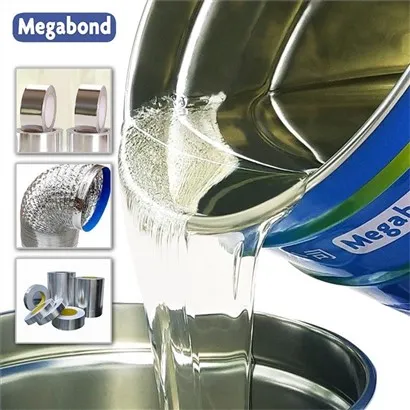
Viscosity is basically a measure of a fluid's resistance to flow. You can think of it as how "thick" or "thin" a liquid is. For example, water has a low viscosity - it flows easily, right? On the other hand, honey has a high viscosity. It's thick and doesn't flow as quickly as water.
In the world of adhesives, viscosity plays a crucial role. It affects how the adhesive is applied, how it spreads, and how well it bonds different materials together.
Viscosity of Solvent Free Polyurethane Adhesive
Solvent Free Polyurethane Adhesive comes in different viscosities depending on its intended use. We have a range of products, each designed to meet specific requirements in various industries.
For instance, our Solvent-free Polyurethane Laminating Adhesive is formulated with a viscosity that allows for smooth and even application during the lamination process. This type of adhesive is commonly used in the packaging industry to bond different layers of materials, such as plastic films and paper. The right viscosity ensures that the adhesive spreads evenly across the surfaces, creating a strong and durable bond.
Our Solvent-free Polyether Laminating Adhesive also has a carefully controlled viscosity. It's designed to work well with polyether-based materials and provides excellent adhesion. The viscosity of this adhesive is optimized to ensure that it can be easily pumped and applied using standard equipment.
And then there's our Solvent-free 125℃ Retortable Laminating Adhesive. This adhesive is used in applications where the bonded materials need to withstand high temperatures and harsh conditions, such as in the food packaging industry for products that are retorted. The viscosity of this adhesive is adjusted to ensure that it maintains its integrity and bonding strength even under extreme conditions.
Factors Affecting Viscosity
Several factors can affect the viscosity of Solvent Free Polyurethane Adhesive. Temperature is one of the most significant factors. Generally, as the temperature increases, the viscosity of the adhesive decreases. This means that the adhesive becomes thinner and flows more easily. Conversely, when the temperature drops, the adhesive becomes thicker and more difficult to apply.


The formulation of the adhesive also plays a role. Different chemical components and additives can be used to adjust the viscosity to the desired level. For example, some additives can increase the viscosity, while others can decrease it.
The shear rate, which is the rate at which the adhesive is deformed or sheared, can also affect its viscosity. In some cases, the adhesive may exhibit non-Newtonian behavior, which means that its viscosity changes depending on the shear rate.
Measuring Viscosity
There are several methods for measuring the viscosity of Solvent Free Polyurethane Adhesive. One common method is to use a viscometer. A viscometer measures the resistance of the adhesive to flow under specific conditions. There are different types of viscometers, such as rotational viscometers and capillary viscometers, each with its own advantages and limitations.
Another way to assess the viscosity is through visual inspection and tactile evaluation. Experienced operators can often tell if the adhesive has the right viscosity based on how it looks and feels during the application process. However, this method is less precise and is usually used in conjunction with more accurate measurement techniques.
Importance of Controlling Viscosity
Controlling the viscosity of Solvent Free Polyurethane Adhesive is crucial for ensuring consistent and high-quality bonding. If the viscosity is too high, the adhesive may be difficult to apply, leading to uneven distribution and poor bonding. On the other hand, if the viscosity is too low, the adhesive may run off the surfaces or not provide enough bonding strength.
By carefully controlling the viscosity, we can ensure that our adhesives perform as expected in different applications. This helps our customers achieve better results, reduce waste, and improve the overall efficiency of their production processes.
Applications and Viscosity Requirements
Different applications have different viscosity requirements for Solvent Free Polyurethane Adhesive. In the automotive industry, for example, adhesives with a relatively high viscosity are often used to bond large components and provide structural support. These adhesives need to be thick enough to hold the parts in place during the curing process.
In the electronics industry, where precision is key, adhesives with lower viscosities are typically used. These adhesives can be applied in small amounts and can flow into tight spaces to bond delicate components.
In the construction industry, the viscosity of the adhesive may need to be adjusted depending on the type of materials being bonded and the application method. For example, adhesives used for bonding tiles may have a higher viscosity to prevent them from sagging or sliding before they cure.
Conclusion
So, as you can see, the viscosity of Solvent Free Polyurethane Adhesive is a critical property that affects its performance and suitability for different applications. At our company, we take great care in formulating our adhesives to ensure that they have the right viscosity for each specific use.
If you're in the market for Solvent Free Polyurethane Adhesive and have questions about viscosity or any other aspect of our products, don't hesitate to reach out. We're here to help you find the perfect adhesive solution for your needs. Whether you're in the packaging, automotive, electronics, or any other industry, we have the expertise and the products to meet your requirements. Let's start a conversation and see how we can work together to achieve your goals.
References
- ASTM D2196 - Standard Test Methods for Rheological Properties of Non - Newtonian Materials by Rotational Viscometer
- "Handbook of Adhesives" by I. Skeist