

Hey there! As a supplier of laminating adhesives, I often get asked about the wetting properties of our products. Wetting is a crucial factor when it comes to laminating adhesives, and today, I'm gonna break it down for you.
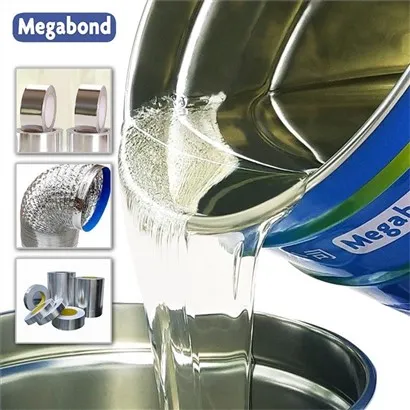
So, what exactly are wetting properties? In simple terms, wetting refers to how well an adhesive spreads and adheres to a substrate. When an adhesive has good wetting properties, it can cover the surface of the substrate evenly, forming a strong bond. On the other hand, poor wetting can lead to issues like air bubbles, uneven adhesion, and reduced bond strength.
Let's dive into why wetting is so important for laminating adhesives. In the laminating process, we're essentially joining two or more layers of materials together. If the adhesive doesn't wet the surfaces properly, it won't be able to create a uniform bond. This can result in delamination, where the layers separate over time. And that's a big no - no in industries like packaging, where the integrity of the laminated structure is essential for product protection.
Now, let's talk about how we ensure our laminating adhesives have good wetting properties. One of the key factors is the formulation of the adhesive. We use high - quality raw materials and advanced manufacturing processes to create adhesives that have the right balance of viscosity and surface tension. Viscosity affects how easily the adhesive can flow and spread, while surface tension determines how well it can interact with the substrate.
For example, our Solvent - free Polyether Laminating Adhesive is specially formulated to have excellent wetting characteristics. Its low viscosity allows it to flow smoothly over the substrate, and its optimized surface tension ensures that it can adhere well to a variety of materials, including plastics, papers, and foils.
Another important aspect is the surface preparation of the substrates. Even the best adhesive won't wet well if the substrate surface is dirty, oily, or has a low surface energy. That's why we often recommend some form of surface treatment before applying the adhesive. This could involve corona treatment for plastics, which increases the surface energy and makes it more receptive to the adhesive.
In addition to formulation and surface preparation, the application method also plays a role in wetting. We offer different application techniques, such as roll - coating and spray - coating, depending on the specific requirements of the laminating process. Each method has its own advantages when it comes to achieving good wetting. For instance, roll - coating can provide a more uniform application of the adhesive, which is beneficial for large - scale laminating operations.
Let's take a look at some real - world examples. In the food packaging industry, our Solvent - free 121℃ Retortable Laminating Adhesive has been widely used. This adhesive needs to wet the surfaces of the packaging materials well to ensure a strong bond that can withstand the high - temperature and high - pressure conditions of the retort process. Our customers have reported that the excellent wetting properties of this adhesive have led to high - quality laminated packages that maintain their integrity even after the retort treatment.
When it comes to laminating aluminum foil to films, our Solvent - free Aluminum Foil To Films Laminating Adhesive shines. Aluminum foil has a unique surface that can be challenging to wet. However, our adhesive is designed to overcome these challenges. It can spread evenly over the foil surface and form a strong bond with the film layer, preventing any delamination issues.


But how do we test the wetting properties of our adhesives? We use a variety of methods, including contact angle measurement. A lower contact angle indicates better wetting. We also conduct practical laminating tests using different substrates and application conditions to ensure that the adhesive performs as expected in real - world scenarios.
There are also some external factors that can affect wetting. Temperature and humidity can have a significant impact. Higher temperatures generally reduce the viscosity of the adhesive, making it easier to flow and wet the surface. However, extreme temperatures or high humidity can also cause problems, such as premature curing or moisture absorption, which can affect the bond quality. That's why we provide guidelines on the optimal environmental conditions for using our adhesives.
In conclusion, good wetting properties are essential for laminating adhesives. At our company, we're committed to developing adhesives that can wet a wide range of substrates effectively. Our focus on formulation, surface preparation, application methods, and quality testing ensures that our customers get high - performance laminating solutions.
If you're in the market for laminating adhesives and want to learn more about how our products can meet your needs, we'd love to hear from you. Whether you're in the packaging, automotive, or any other industry that requires reliable laminating solutions, don't hesitate to reach out. Let's have a chat about your specific requirements and see how we can work together to achieve the best results.
References
- "Handbook of Adhesive Technology", Second Edition, Edited by A. Pizzi and K. L. Mittal
- "Adhesives and Sealants Technology: Chemistry and Applications", Edited by C. A. Dostal