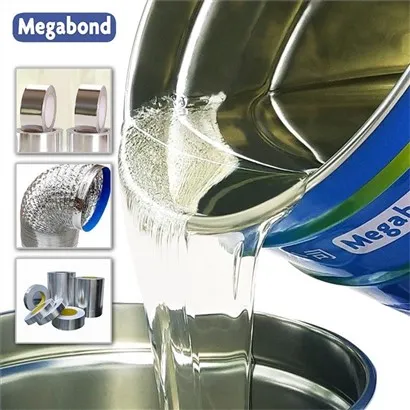


Hey there! As a supplier of solvent-based lamination adhesive, I often get asked a bunch of questions about our products. One question that pops up quite a bit is, "Does solvent-based lamination adhesive shrink during the curing process?" Let's dig into this topic and see what's what.
First off, let's understand what solvent-based lamination adhesive is. It's a type of adhesive that uses solvents to keep the adhesive in a liquid state until it's applied. Once it's spread between two materials for lamination, the solvents start to evaporate during the curing process. This is a crucial step because it allows the adhesive to harden and bond the materials together.
Now, to answer the big question: yes, solvent-based lamination adhesive can shrink during the curing process. But it's not as simple as just saying "it shrinks." There are a bunch of factors that can affect how much it shrinks and whether that shrinkage is a problem or not.
One of the main factors is the type of solvent used. Different solvents have different evaporation rates. If a solvent evaporates too quickly, the adhesive might shrink more rapidly, which could lead to issues like warping or delamination of the laminated materials. On the other hand, if the solvent evaporates too slowly, the curing process will take longer, and the adhesive might not reach its full bonding strength.
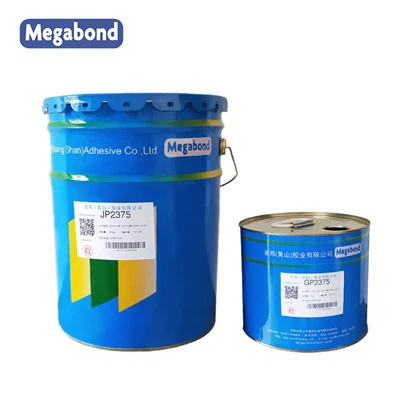
The formulation of the adhesive itself also plays a huge role. Some adhesives are designed to have minimal shrinkage. For example, our Solvent-based MET Plastic Film Laminating Adhesive is formulated to provide a stable bond with relatively low shrinkage. This is great for applications where dimensional stability is crucial, like in the packaging of high - precision products.

Another factor is the curing conditions. Temperature and humidity can have a significant impact on the shrinkage of the adhesive. Higher temperatures generally speed up the evaporation of the solvents, which can increase the rate of shrinkage. Humidity can also affect the curing process. If the humidity is too high, it can slow down the evaporation of the solvents and potentially lead to uneven shrinkage.
Let's talk about why shrinkage matters. In some applications, a little bit of shrinkage might not be a big deal. For example, in general - purpose packaging, a small amount of shrinkage might not affect the functionality of the package. However, in other applications, like in the production of electronic components or medical devices, even a tiny amount of shrinkage can cause problems. It could lead to misalignment of parts or a loss of the adhesive's bonding strength over time.
We've done a lot of research and testing to minimize the shrinkage of our adhesives. Our Solvent-based Anti - Chemicals Polyether Laminating Adhesive is a great example. It's designed to resist chemicals while also maintaining a low level of shrinkage during the curing process. This makes it suitable for applications where the laminated materials might come into contact with various chemicals.
In addition to the formulation and testing, we also provide technical support to our customers. We work with them to understand their specific needs and recommend the right adhesive for their application. We can also help them optimize the curing conditions to minimize shrinkage.
Now, let's look at some real - world examples. A customer who was using our adhesive for laminating plastic films for food packaging was initially experiencing some issues with shrinkage. The laminated films were curling up slightly, which was affecting the appearance and functionality of the packages. After analyzing their curing process, we found that the temperature in their curing chamber was too high. By adjusting the temperature and using our Solvent-based 125℃ Anti - Retorting Laminating Adhesive, which is designed to perform well under specific temperature conditions, they were able to reduce the shrinkage significantly and improve the quality of their products.
So, if you're in the market for solvent - based lamination adhesive, don't just focus on the price or the brand. Consider the shrinkage factor and how it might affect your application. And if you have any questions or need help choosing the right adhesive, don't hesitate to reach out. We're here to make sure you get the best product for your needs.
Whether you're a small - scale manufacturer or a large - scale industrial operation, we have the expertise and the products to meet your requirements. Our team of experts is always ready to assist you in finding the perfect adhesive solution. We understand that every application is unique, and we're committed to providing customized solutions to our customers.
If you're interested in learning more about our solvent - based lamination adhesives or want to discuss your specific needs, feel free to start a conversation with us. We'll be happy to provide you with samples, technical data, and any other information you might need. Let's work together to find the best adhesive for your lamination process and ensure the success of your products.
References
- Adhesive Technology Handbook, Third Edition by Andrew Pizzi and K. L. Mittal
- Handbook of Adhesive Technology by Skeist Irving