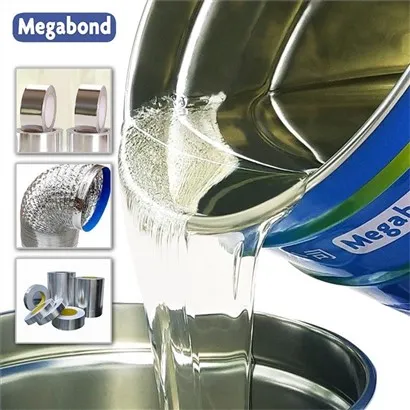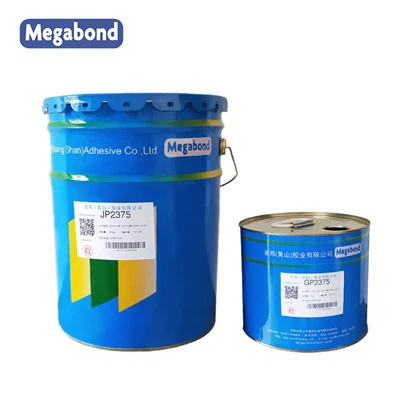


Hey there! As a supplier of Solvent Free Polyurethane Adhesive, I often get asked about how well our product adheres to plastics. So, I thought I'd dive into this topic and share some insights with you.
First off, let's understand what Solvent Free Polyurethane Adhesive is. It's a type of adhesive that doesn't contain any solvents. This makes it more environmentally friendly and safer to use compared to solvent - based adhesives. It also has some great properties like high strength, flexibility, and good chemical resistance.
Now, when it comes to plastics, there's a wide range of them out there, each with its own unique properties. Some plastics are polar, like polycarbonate (PC), polyamide (PA), and acrylonitrile - butadiene - styrene (ABS). These plastics have a surface with a certain amount of polarity, which means they can form strong bonds with the Solvent Free Polyurethane Adhesive. The adhesive has functional groups that can interact with the polar groups on the plastic surface through hydrogen bonding, dipole - dipole interactions, or other intermolecular forces.
For example, when bonding PC with our Solvent Free Polyurethane Adhesive, the adhesive can wet the surface of the PC well. This wetting is crucial because it allows the adhesive to spread evenly and form a continuous bond. Once the adhesive cures, it creates a strong and durable bond that can withstand various mechanical stresses.
On the other hand, there are non - polar plastics such as polyethylene (PE) and polypropylene (PP). These plastics have a very low surface energy, which makes it difficult for the adhesive to wet their surfaces. The lack of polar groups on their surface also means there are fewer opportunities for strong intermolecular interactions with the adhesive. But don't worry, we've got solutions for that too.
One way to improve the adhesion to non - polar plastics is by surface treatment. We can use methods like corona treatment, plasma treatment, or chemical etching. These treatments increase the surface energy of the plastic by introducing polar groups on the surface. For instance, corona treatment uses a high - voltage electrical discharge to break the chemical bonds on the plastic surface and create free radicals. These free radicals can then react with oxygen in the air to form polar functional groups like carbonyl and hydroxyl groups. After surface treatment, the Solvent Free Polyurethane Adhesive can adhere much better to the non - polar plastics.
Another factor that affects adhesion is the curing process of the adhesive. Our Solvent Free Polyurethane Adhesive usually cures through a reaction between two components: a polyol and an isocyanate. The curing time and temperature are important parameters. If the curing temperature is too low, the reaction may not proceed completely, resulting in a weak bond. On the other hand, if the temperature is too high, it may cause the plastic to deform or the adhesive to degrade. So, it's essential to follow the recommended curing conditions for the best adhesion results.
Let me tell you about some of our specific products. We have the Solvent - free Polyurethane Laminating Adhesive. This adhesive is great for laminating different plastic films together. It has excellent adhesion to a variety of plastics, and it can provide a clear and strong bond. Whether you're working on food packaging or industrial applications, this adhesive can meet your needs.
Then there's the Solvent - free Anti - Chemicals Laminating Adhesive. If you're dealing with plastics that will be exposed to chemicals, this is the adhesive for you. It not only adheres well to plastics but also provides good chemical resistance. So, your plastic laminates will stay intact even in harsh chemical environments.
And for those who need to use plastics in high - temperature applications, we offer the Solvent - free 125℃ Retortable Laminating Adhesive. This adhesive can maintain its adhesion strength even at 125℃. It's perfect for packaging products that require sterilization at high temperatures.


In conclusion, Solvent Free Polyurethane Adhesive can have good adhesion to plastics. While it bonds well to polar plastics right out of the box, with proper surface treatment, it can also adhere to non - polar plastics. Our range of products is designed to meet different application requirements, whether it's for general lamination, chemical - resistant applications, or high - temperature use.
If you're in the market for a reliable Solvent Free Polyurethane Adhesive for your plastic - bonding needs, I'd love to have a chat with you. Reach out to us, and we can discuss your specific requirements and find the best adhesive solution for you.
References
- "Adhesion Science and Engineering: Volume 1: Surfaces, Chemistry and Physics" by K. L. Mittal
- "Polyurethane Handbook" by G. Oertel