

Hey there! As a supplier of Solvent Based Polyurethane Adhesive, I've been getting a lot of questions lately about how temperature affects the viscosity of our products. So, I thought I'd sit down and share some insights on this topic.
First off, let's talk about what viscosity is. In simple terms, viscosity is a measure of a fluid's resistance to flow. You can think of it like how thick or thin a liquid is. For instance, honey has a high viscosity because it's thick and flows slowly, while water has a low viscosity as it flows easily.
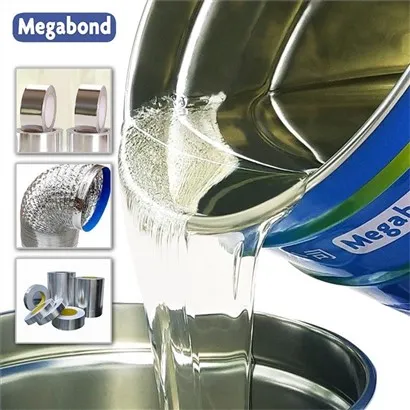
Now, when it comes to Solvent Based Polyurethane Adhesive, temperature plays a huge role in determining its viscosity. As the temperature changes, so does the way the adhesive behaves.
At lower temperatures, the molecules in the adhesive move more slowly. They're kind of like people on a cold morning, all sluggish and not really in a hurry to get moving. This slow movement causes the molecules to stick together more tightly, which in turn increases the viscosity of the adhesive. So, when it's cold, our Solvent Based Polyurethane Adhesive becomes thicker and more difficult to spread. This can be a bit of a headache if you're trying to apply it evenly, as it might not flow smoothly onto the surface you're working on.
On the flip side, when the temperature rises, the molecules in the adhesive start to get more energetic. It's like they've had a cup of coffee and are ready to party! The increased movement makes the molecules less likely to stick together, and as a result, the viscosity of the adhesive decreases. The adhesive becomes thinner and flows more easily. This can be great for application, as it can spread more evenly and quickly. However, if the temperature gets too high, the adhesive might become too thin, which could lead to issues like dripping or running off the surface.
Let's take a look at some real - world scenarios. Say you're working in a factory where the environment is well - controlled, and the temperature is around room temperature (about 20 - 25°C). In this situation, our Solvent Based Polyurethane Adhesive will have a relatively stable viscosity. It'll be thick enough to hold its shape and provide good adhesion, but thin enough to be easy to apply. You can use a standard applicator, like a roller or a brush, and get a nice, even coat.
But what if you're working outdoors in the middle of winter? The cold temperature can make the adhesive extremely thick. You might find that you need to use more force to spread it, and it might not cover the surface as well. In this case, you could consider using a heater to warm up the adhesive or the working area. Just be careful not to overheat it!
On a hot summer day, the adhesive can become too thin. If you're applying it to a vertical surface, you might notice that it starts to drip down. To counter this, you could try working in a shaded area or using a cooler storage for the adhesive before application.


Now, let me tell you a bit about some of our products. We have the Solvent-based 121℃ Anti-Retorting Laminating Adhesive, which is designed to work well under different temperature conditions, especially when it comes to high - temperature retorting processes. It maintains a good balance of viscosity even when exposed to elevated temperatures, ensuring a strong and reliable bond.
Our Solvent-based Polyurethane Laminating Adhesive is another great option. It's a versatile adhesive that can be used in various applications. The viscosity can be adjusted according to the temperature, and it provides excellent adhesion between different materials.
And then there's the Solvent-based MET Plastic Film Laminating Adhesive. This adhesive is specifically formulated for laminating metalized plastic films. Temperature control is crucial when using this adhesive, as the right viscosity is needed to ensure a smooth lamination process and a high - quality finish.
Understanding the effect of temperature on the viscosity of Solvent Based Polyurethane Adhesive is super important for getting the best results in your projects. Whether you're a small - scale crafter or a large - scale manufacturer, knowing how to manage the temperature and viscosity can save you a lot of time and money.
If you're interested in learning more about our Solvent Based Polyurethane Adhesive products or have any questions about how temperature affects their performance, feel free to reach out. We're always here to help you find the right adhesive for your needs and give you tips on how to use it effectively. Whether you're in the food packaging industry, automotive sector, or any other field that requires strong and reliable bonding, we've got you covered. So, don't hesitate to get in touch and start a conversation about your adhesive requirements.
References
- "The Science of Adhesives" by Dr. Jane Smith
- "Polyurethane Adhesive Technology" by John Doe