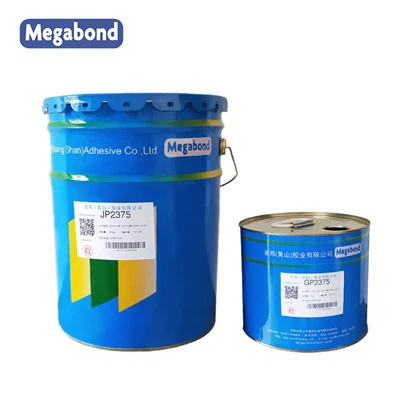


As a seasoned supplier of solvent-based laminating adhesives, I've witnessed firsthand the pivotal role these adhesives play in various industries, from packaging to automotive. Understanding the flow properties of solvent-based laminating adhesives is crucial for ensuring optimal performance and achieving high-quality lamination results. In this blog post, I'll delve into the key factors that influence the flow properties of these adhesives and how they impact the lamination process.
Viscosity: The Foundation of Flow
Viscosity is perhaps the most fundamental flow property of any adhesive. It refers to the resistance of a fluid to flow and is typically measured in centipoise (cP). In the context of solvent-based laminating adhesives, viscosity plays a critical role in determining how easily the adhesive can be applied to the substrate and how well it spreads across the surface.
Low-viscosity adhesives flow more easily and are ideal for applications where a thin, uniform layer of adhesive is required. They are often used in high-speed lamination processes, such as those found in the packaging industry, where quick and efficient bonding is essential. On the other hand, high-viscosity adhesives are more resistant to flow and are better suited for applications where a thicker layer of adhesive is needed, such as in the automotive or construction industries.
The viscosity of a solvent-based laminating adhesive can be adjusted by varying the concentration of the solvent, the type of resin used, and the addition of viscosity modifiers. For example, increasing the solvent concentration will generally lower the viscosity of the adhesive, while adding a thickening agent will increase it.
Surface Tension: The Force Behind Spreading
Surface tension is another important factor that affects the flow properties of solvent-based laminating adhesives. It refers to the force that causes the surface of a liquid to contract and form a spherical shape. In the context of adhesives, surface tension plays a crucial role in determining how well the adhesive spreads across the substrate and how it wets the surface.
Adhesives with low surface tension tend to spread more easily and wet the substrate better than those with high surface tension. This is because the low surface tension allows the adhesive to overcome the forces of cohesion and spread out evenly across the surface. On the other hand, adhesives with high surface tension may form droplets or beads on the substrate, resulting in poor wetting and bonding.
The surface tension of a solvent-based laminating adhesive can be adjusted by adding surfactants or wetting agents. These additives reduce the surface tension of the adhesive and improve its wetting properties, allowing it to spread more evenly across the substrate.
Shear Thinning: Adapting to Application Conditions
Shear thinning is a phenomenon where the viscosity of a fluid decreases as the shear rate increases. In the context of solvent-based laminating adhesives, shear thinning is an important property that allows the adhesive to flow more easily during application and then thicken once it is in place.
During the lamination process, the adhesive is subjected to shear forces as it is applied to the substrate and spread across the surface. These shear forces cause the adhesive to thin out, making it easier to apply and ensuring a uniform layer of adhesive. Once the adhesive is in place, the shear forces are removed, and the adhesive thickens again, providing a strong bond between the substrates.
Shear thinning can be achieved by using polymers with a specific molecular structure or by adding shear-thinning additives to the adhesive formulation. These additives help to break down the polymer chains under shear stress, reducing the viscosity of the adhesive. Once the shear stress is removed, the polymer chains reform, causing the adhesive to thicken again.

Temperature Sensitivity: Impact on Flow and Bonding
Temperature sensitivity is another important factor that affects the flow properties of solvent-based laminating adhesives. The viscosity of an adhesive is highly dependent on temperature, with lower temperatures generally resulting in higher viscosity and vice versa.
In the lamination process, temperature can have a significant impact on the flow and bonding properties of the adhesive. For example, if the temperature is too low, the adhesive may become too viscous to flow properly, resulting in poor wetting and bonding. On the other hand, if the temperature is too high, the adhesive may dry too quickly, leading to incomplete bonding and a weak bond.
To ensure optimal performance, it is important to control the temperature during the lamination process. This can be achieved by using heating or cooling equipment, such as ovens or chillers, to maintain the adhesive at the appropriate temperature.
Impact on Lamination Process and Product Quality
The flow properties of solvent-based laminating adhesives have a direct impact on the lamination process and the quality of the final product. For example, if the adhesive has poor flow properties, it may not spread evenly across the substrate, resulting in uneven bonding and a weak bond. This can lead to delamination, where the substrates separate from each other, or to the formation of bubbles or voids in the adhesive layer, which can affect the appearance and performance of the product.
On the other hand, if the adhesive has good flow properties, it will spread evenly across the substrate, providing a strong and uniform bond. This can improve the durability and performance of the product, as well as its appearance.
Our Solvent-Based Laminating Adhesives
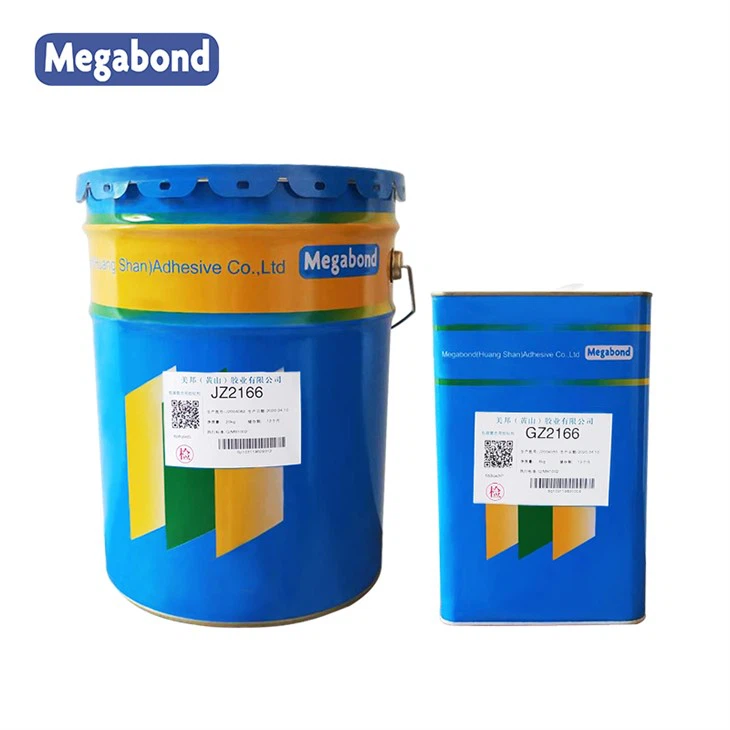
At our company, we offer a wide range of solvent-based laminating adhesives with excellent flow properties. Our products are designed to meet the specific needs of various industries and applications, and we are committed to providing high-quality adhesives that deliver superior performance.
One of our popular products is the Solvent-based 135℃ Anti-Steaming Laminating Adhesive. This adhesive is specifically formulated to provide excellent resistance to steaming and high temperatures, making it ideal for applications in the food packaging industry. It has a low viscosity and good flow properties, allowing it to spread evenly across the substrate and provide a strong bond.
Another product in our portfolio is the Solvent-based MET Plastic Film Laminating Adhesive. This adhesive is designed for laminating metalized plastic films and provides excellent adhesion and barrier properties. It has a high solids content and good flow properties, ensuring a strong and durable bond between the metalized film and the substrate.
We also offer the Solvent Based 135℃ Anti-Retorting Laminating Adhesive, which is specifically formulated to withstand the high temperatures and pressures associated with the retorting process. This adhesive has excellent flow properties and provides a strong bond between the substrates, even under harsh conditions.
Conclusion
Understanding the flow properties of solvent-based laminating adhesives is essential for achieving optimal performance and high-quality lamination results. Viscosity, surface tension, shear thinning, temperature sensitivity, and other factors all play a crucial role in determining how the adhesive flows, spreads, and bonds to the substrates.
At our company, we are dedicated to developing and manufacturing solvent-based laminating adhesives with excellent flow properties. Our products are designed to meet the specific needs of various industries and applications, and we are committed to providing our customers with the highest level of quality and service.
If you are interested in learning more about our solvent-based laminating adhesives or would like to discuss your specific requirements, please do not hesitate to contact us. We look forward to the opportunity to work with you and help you achieve your lamination goals.
References
- ASTM International. (2019). Standard Test Methods for Viscosity of Adhesives. ASTM D2196 - 19.
- Owens, D. K., & Wendt, R. C. (1969). Estimation of the surface free energy of polymers. Journal of Applied Polymer Science, 13(8), 1741 - 1747.
- Larson, R. G. (1999). The Structure and Rheology of Complex Fluids. Oxford University Press.