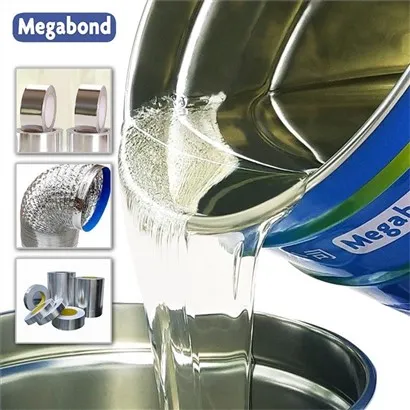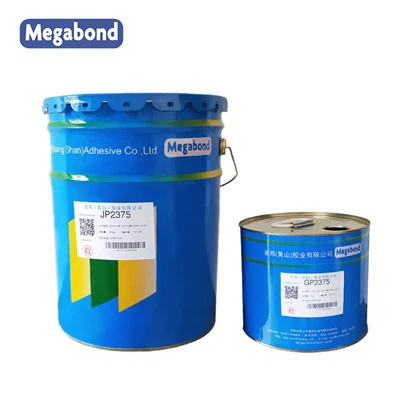


Hey there! As a supplier of polyurethane laminating adhesives, I often get asked about the sound insulation property of these adhesives. So, I thought I'd take a moment to share some insights on this topic.
First off, let's understand what polyurethane laminating adhesives are. These adhesives are widely used in various industries for bonding different materials together. They offer excellent adhesion, flexibility, and durability, making them a popular choice for laminating applications.


Now, when it comes to sound insulation, polyurethane laminating adhesives can play a significant role. Sound insulation is all about reducing the transmission of sound from one area to another. It's crucial in many settings, such as buildings, vehicles, and industrial equipment, where noise reduction is a priority.
One of the key factors that contribute to the sound insulation property of polyurethane laminating adhesives is their viscoelastic nature. Viscoelastic materials have the ability to absorb and dissipate energy, which helps in reducing the transmission of sound waves. When a sound wave hits a layer of polyurethane laminating adhesive, the adhesive absorbs the energy of the wave and converts it into heat, thereby reducing the intensity of the sound that passes through.
Another important aspect is the thickness and density of the adhesive layer. Generally, a thicker and denser layer of adhesive can provide better sound insulation. This is because a thicker layer has more material to absorb the sound energy, and a denser material has a higher mass, which helps in blocking the sound waves.
The type of materials being laminated also affects the sound insulation performance. For example, if you're laminating a soft, porous material with a polyurethane adhesive, the overall sound insulation can be improved as the porous material can also absorb some of the sound energy. On the other hand, if you're laminating two hard, non - porous materials, the adhesive will play a more crucial role in reducing the sound transmission.
Let's take a look at some of our specific products and how they might be used in terms of sound insulation.
We have the Solvent - based Door Panel PVC Metal Laminating Adhesive. This adhesive is great for laminating door panels, which are an important part of sound insulation in buildings. By using this adhesive to bond PVC and metal layers in door panels, we can create a more effective sound - blocking barrier. The viscoelastic properties of the adhesive help in absorbing the sound energy that tries to pass through the door, making the interior of the room quieter.
Our Solvent - based AL Copper Material Laminating Adhesive is another option. When used to laminate aluminum and copper materials, it can be applied in various industrial settings where sound insulation is needed. For example, in electrical enclosures or machinery housings, this adhesive can help in reducing the noise generated by the equipment inside. The combination of the adhesive's energy - absorbing properties and the metal's mass can create a good sound - blocking structure.
The Solvent - based Metal Plastic Tinplate Laminating PU Glue is also worth mentioning. In automotive applications, for instance, it can be used to laminate metal and plastic parts. This helps in reducing the noise inside the vehicle cabin. The adhesive acts as a buffer between the metal and plastic, absorbing the vibrations and sound waves that are generated during the vehicle's operation.
However, it's important to note that achieving the best sound insulation results requires proper application. The adhesive needs to be applied evenly and at the right thickness. Any gaps or unevenness in the adhesive layer can reduce its sound insulation effectiveness. Also, the surface preparation of the materials being laminated is crucial. The surfaces should be clean, dry, and free of any contaminants to ensure a strong bond and optimal performance.
In addition to the physical properties of the adhesive, the design of the laminated structure also matters. For example, using multiple layers of different materials with polyurethane laminating adhesives in between can create a more complex sound - blocking system. This multi - layer approach can be very effective in reducing the transmission of different frequencies of sound.
When considering the use of polyurethane laminating adhesives for sound insulation, it's also important to think about the environmental conditions. Some adhesives may perform better in certain temperature and humidity ranges. Our products are designed to have a wide range of environmental tolerance, but it's still something to keep in mind when choosing the right adhesive for your specific application.
So, if you're in an industry where sound insulation is a concern, our polyurethane laminating adhesives could be a great solution. Whether you're in construction, automotive, or industrial manufacturing, we have products that can meet your needs.
If you're interested in learning more about our products or want to discuss a specific application for sound insulation, don't hesitate to reach out. We're here to help you find the best adhesive solution for your project. Let's work together to create quieter and more comfortable environments.
References
- "Sound Insulation Principles and Applications" - A textbook on the basics of sound insulation
- "Polymer Science and Engineering" - A resource that explains the properties of viscoelastic materials like polyurethane adhesives